31 December 2006

Somalia - "Life was better under Islamist"

In our American zeal to bring democracy to the world I thought this quote might give pause for thought.


"In June this year, when the Supreme Council of Islamic Courts (SCIC) first took control of Mogadishu, the capital was transformed. A ruined city of warlord-controlled fiefdoms became largely safe. Guns disappeared from the streets. Not everybody approved of the SCIC, which started as 11 different clan-based courts of justice, but few in Mogadishu could deny that life was better under the Islamists. Outsiders' fears of an 'African Taliban' seemed misplaced." Xan Rice, The Observer

My comment: I would suggest that Xan Rice visit the Islamic prisons around the world where life is not "better" for those who disagree with the prevalent theology of the society. Tyranny is tyranny wither it is power hungry warlords or power hungry religious fundamentalist who dish it out.


Xan Rice, The Observer, Sunday, December 31, 2006
La Tribuna Magazine Cover Ethiopians Invade Somalia - 1930s (Art.com)

Substance over Symbol


As I have contemplated symbol lately I feel that I may be in danger of error. I have been so focused on correct symbolism that I have preferred correct symbols over substance.
God made it clear in the Old Testament that symbols are important. People died for misuse of God's given symbols like the Ark of the Covenant, or the offering "strange fire".

I do believe that symbols are important, but symbol without substance is a type of poverty.
The symbols that God gave in the Old Testament were pure, and were not at the privy of men to change. In this age it seems that God tolerates misuse and error to a generous degree. Obviously this is because Christ has come and the symbols of the Old Testament, while only shadows, were fulfilled in Christ. Still, we should take great care with the symbols we offer in this age.

A friend of mine attended a very liturgical wedding recently. The symbolism was perfect. You could not have attended the service without seeing the symbolism of Christ and His Church. Yet, the couple that married was less than godly. The symbols were all in place, but the substance was weak at best. "It was a sham," said my friend.

I suppose if I had to make a choice, I would prefer substance over symbol. But, once again I find myself looking for balance in an imbalanced world. In an ideal situation we would find correct symbols with correct substance. Weddings that correctly present Christ and His Church, and marriages that have a depth of love that the world cannot imitate nor understand.
Christ is the reality of the symbols we handle. They are but a shadow of the Way, the Truth and the Life. He is the substance of our faith and symbols. In our striving for correct symbols let us strive all the more to know Christ Himself. Knowing, loving and worshiping Him are the purposes of the symbols.

The Marriage of Giovanni Arnolfini
by
Jan van Eyck (Art.com)

27 December 2006

Quote of the Weak -- The feast of Christmas

"In the feast of Christmas we are directed in a new way to the very thing that stands in the center of the Bible, to the simple reality of the gacious and merciful action which comes from God into this lost world. We are no longer concerned with elegant and gay pictures and fancies; from the reality which is so plain and from our distress, we thirst for the reality of the great divine help. Our question is whether God really has sent the One who has the right and authority for complete, all-embracing, final redemption. And the Christmas message is the complete, glorious "Yes" of the answer to this question."

-- Dietrich Bonhoeffer

Photo and quote - International Dietrich Bonhoeffer Society

20 December 2006

Do Symbols Matter?

I love the scene in Indiana Jones and the last Crusade where the "cup of Christ" is revealed as a plain simple common goblet. While the magic that is attached to the goblet is the fantasy of Hollywood the image of simplicity makes up for it.

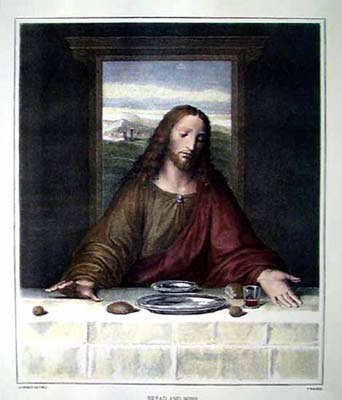
In one sense symbols are nothing. Bread is nothing, wine is nothing and water is nothing. These are simple elements of life. However, in the right setting and with the right words these elements are transformed into symbols of something much greater.

A red light in a window can symbolize a house of ill repute. A red light in a traffic signal is a symbol that says "stop", and bears the full weight of the law if it is disobeyed. Both are just red lights. One advertises a message and identifies a place, the other bears authority and commands respect as it stands in the place of the reality.

How we deal with symbols in the church is important. Imagine a traffic light with three green globes, or one with red on the bottom and green on the top. If it matters how lights are handled it certainly matters how we handle symbols in the church.

Using grape flavored drink and yeast bread in communion may not be sinful, but it does hinder the symbol. Showering a baby may be true baptism, but the picture is blurred. An abusive husband may indeed be a husband, but he is a false example of Christ.

I am becoming convinced that the churches that present the purest symbols are the churches that present the truest picture of Christ. I am not advocating finery or pomp. I am advocating simple obedience.
In this Christmas season let us review our symbols and strive for a true presentation of Christ.
Photo from Indiana Jones and the Last Crusade

European Efficiency

Before Thanksgiving our government announced that travelers who plan to fly place their carry-on liquids and gels (less than 3 oz per container) in a quart sized plastic bag.

Simple enough?

Apparently not.

Almost a month later about every third traveler passing through security holds up the line while they dig their liquids out of their bag and throw away their bottled water or 32 oz Coke. It took about 20 minutes to get through security in the States.

When in Amsterdam a few weeks ago I noticed that there were multiple stations set-up throughout the airport with a few simple things. Large posters explaining the new regulations (in multiple languages and symbols), uniformed attendants who were screening passengers as they walked by (asking "Are you carrying any liquids or gels?") and plastic bags for people who were carrying such items. By the time we got to the security check we had passed two such stations and had had plenty of opportunity to make adjustments to our carry-on bags.

It took less than five minutes to get through a thorough security check in Amsterdam (including taking a survey about how the airport could improve services) and proceed to the gate. I truly appreciate northern European efficiency.

Security at Heathrow, Art.com

15 December 2006

The Spititual Rapist

With his six guns ablaze the revivalist crushes all in his wake.

I am angry today, but I think it might be righteous anger.

I have a friend whose son was the victim of spiritual abuse. This child believes the Gospel and has born fruit of that faith as only a child can do.

Like so many others the child has been faced with questions, the revivalist might call "doubt." Surely the boy has become aware of sin and questions how it is that a child of God can be so bad. So the spiritual rapist aims for the "kill" and tries to force the child to "nail it down!"

The questions pour forth from the pulpit and guilt is heaped upon guilt. "Are you sure that you are sure? Did you say that prayer with your whole heart? Do you remember the date and time? Have you been truly converted? Do you FEEL saved?" And the final blow, "If you died tonight, do you know where you would go? Heaven or HELL?!!"

The answer, according to the spiritual rapist, is a rapturous moment in time that a decision is made from the heart and the child "asks Jesus into his heart" and "makes" him Lord and Savior.

How far from Biblical salvation we have fallen.

How sad it is that we allow men to come into our evangelical churches and abuse our children and the weak. How sad it is that we have come to the place in the history of the Church that we think that preying on souls is considered true spirituality.

If you just believe enough. If you just get the formula correct. If you "place your faith" in Jesus. If you say it the right way, or have the correct experience. Nothing more than existential neo-gnosticism.

The invitation of Christ is not to walk an aisle and make a bunch of promises. His invitation is not to "true conversion" or being "born-again." How can a man decide to be born at all?

Is salvation an event? The historic Christian faith has been understood as more a picture of a journey or race rather than an event. We begin by faith and walk by faith; in the end we are saved if we continue in the faith.

The command of Christ is to believe and repent. The invitation of Christ is simply, "Come and follow me." It is not possible that man could believe without the gift of faith from God. It is not possible that my heart and mind could be changed or that I could be born again unless God creates a new creature. Our salvation is the work of God. We hear and believe, and it is by hearing that faith comes.

When our children or weak ones doubt, we should edify them by encouragement to continue to believe and obey Christ. As Bonhoeffer said, "Only those who believe can obey, and only those who obey can believe." Those who are truly spiritual should feed the hungry ones, and warn the ones in danger.

Enough of the spiritual abuse of our weak ones! May the shepherds of Christ's Church be good shepherds -- feed and guard the sheep.

12 December 2006

What Americans believe about God


By Jennifer Harper
THE WASHINGTON TIMES
Published November 12, 2006

The vast majority of Americans believe in God. But in the land of the free, ideas about the more personal nature of God can be subject to some interpretation. (In this survey traditional Protestants have been distinguished from Evangelical "Born-Again" Christians).

Only 1 percent of Americans overall, for example, think God is female, according to a wide-ranging Harris poll of 2,010 adults. Among men, Protestant and Born-Again Christian respondents, the number was 0 percent; among women and Catholics it was 1 percent; among Jews, 7 percent.

More than a third -- 36 percent -- said God was male. More women than men thought God was male, 39 percent to 34 percent, respectively (interesting that more American women than men consider Biblical language such as "Father" accurate). More than half of Born-Again Christians agreed, along with about 47 percent of the Protestants and Catholics. Other responses were mixed. Overall, 37 percent said God was neither male nor female. Ten percent said God was both male and female, while 17 percent were not entirely sure what they believed.

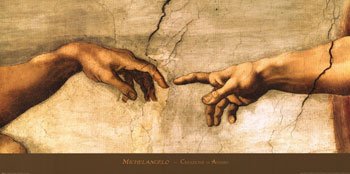
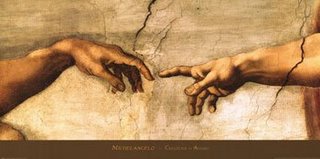
Does God look like Michelangelo's vision on the ceiling of the Sistine Chapel? Maybe. The survey showed that 9 percent said God appeared "like a human with a face, body, arms, legs, eyes," though the percentage was slightly higher -- 13 percent -- among Protestants, but just 1 percent among Jews.

More people -- 41 percent-- were comfortable with the idea that God is a "spirit or power that can take on human form, but is not inherently human." The sentiment was highest among Born-Again Christians, with 60 percent agreeing with the statement (What happened to the doctrine - Fully God and Fully Man?). More than a quarter of Americans overall say God is "a spirit or power that does not take human form," a belief shared by 49 percent of Jewish respondents.

Beliefs about God's involvement in events on Earth also varies. Twenty-seven percent of Catholics said God "controls what happens on Earth," compared with 41 percent among Protestants and 57 percent among Born-Agains. Forty-four percent said God "observes but does not control" what happens here. That figure rises to 58 percent among Catholics, but falls to 37 percent among Born-Agains.

A slim majority of Americans -- 51 percent -- believe Christians, Jews and Muslims "worship the same God," the poll found. That idea is shared by 63 percent of Catholics, about 48 percent of Protestants and Jews and 34 percent of Born-Agains. Almost a third overall said the three faiths do not worship the same God, and 16 percent were unsure. (Jesus said about Himself, "I am the Way, the Truth and the Life. No man comes to the Father except through me." John 14:6)

Intensity of belief also varies among faiths and political parties. Overall, 73 percent of Americans believe in God; the numbers are 97 percent among Born-Agains, 90 percent among Protestants, 84 percent among Catholics, 64 percent among Jews, 83 percent among Republicans and 72 percent among Democrats.

Are Americans "absolutely certain" there is a God? Born-Agains are the most adamant, with 93 percent agreeing with the statement (and how did that 7% become "born-again" and not believe in God???), followed by 76 percent of Protestants, 64 percent of Catholics and 30 percent of Jews. Overall, 6 percent are "absolutely certain" there is no God.

Almost half of Americans overall -- 46 percent -- attend church a few times a year, 35 percent go once a month and a quarter go every week or more often.

The survey was conducted Oct. 4-10 and has a margin of error of two percentage points.

Creation of Adam (Detail) Michelangelo - Art.com

06 December 2006

Celebrating 18 years of happy matrimony

My love busting a pose on the bridge across the moat of the Baroque palace of Schloss Gymnich in Germany.

A wonderful place to celebrate a wonderful gift from God of 18 years of happy matrimony!

Located west of Cologne, Germany this palace was originally constructed in 1390. The castle suffered a fire in 1642 and was restored in 1655. It has served many purposes including official government functions. It is now a wonderful Bed and Breakfast.

05 December 2006

Quote of the Weak - Wisdom

"Getting older does not mean you are wise, it just means you are old."

- Günther Schulze, SCFS Board Member

"A wise man will hear, and will increase learning; and a man of understanding shall attain wise counsels."
(Proverbs 1:5)

Old Man in Armchair, Unknown (17th century) Art.com

27 November 2006

Black Friday

A lot has changed in America since 1932. During the great depression many people were reduced to the humiliation of standing in bread lines for their daily sustenance.

Today I think it can truly be said, "We are rich and have need of nothing, except maybe a Playstation 3!"

What is the cause of our extreme prosperity?

Surely our Puritan work ethic and "Christian" ideals, and some would say our support for the modern state of Israel, have been the cause of much of our nations prosperity. But, a far more sinister promotion to our wealth lurks under the thin skin of our Christian facade -- GREED.

The scenes we witnessed on Friday were despicable in the worst way. Wealthy (in comparison to most of the world's population) people fought over toys and "good deals." We actually saw "animal" behavior over entertainment. We are not far from the Coliseum of Rome.

Many of our Fundamentalist brothers are fond of pointing out that America is becoming Sodom and Gamorrah. The popular teaching is that Sodom and Gamorrah were destroyed for their immorality (particularly homosexuality). I think they are correct in part, but not because of homosexuality (that is simply a symptom and a sign of God's judgment). The cities of Sodom and Gamorrah were known for their PRIDE and GREED as well as their immoral behavior.

"As I live, says the Lord GOD, your sister Sodom and her daughters have not done as you and your daughters have done. Behold, this was the guilt of your sister Sodom: she and her daughters had pride, surfeit of food, and prosperous ease, but did not aid the poor and needy. They were haughty, and did abominable things before me; therefore I removed them, when I saw it." (Ezek. 16:48-50)

Many children (and adults for that matter) will be exposed to greater depths of spiritual poverty this Christmas as they play "Gangsta" video games on their new Playstations, log on to pornographic websites on their new computers and begin making their wish lists for next year.

What is the answer? Should we move to a cave? Should we hide our heads in the sand? Maybe we should have more activities at church to compete with the world? Maybe we should protest? NO!

Christ's Kingdom is not of this world, yet we are called to live in the world and not be of it. Our uniqueness is not that our women wear burkas, or that we all dress alike, or wear name plates with "Elder So and So" on it, or what we do not do. Our uniqueness is the Spirit that dwells within us by faith and is manifest outwardly in love, godliness and good character. It is what we DO (obedience to love) that displays God in us.

In a prosperous nation we are commanded to hear the Savior knocking and open the door. He will fellowship with us. We can overcome as our hearts desire Christ more than the things of this world. In the obscenity of our culture the light will shine as we simply obey and love Christ.

Photos-
Bread Line - Dorothea Lange Collection, Oakland Museum of California
Macy's Department Store on Black Friday, CNN.COM

06 November 2006

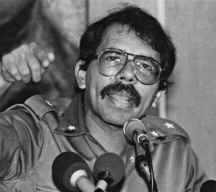
Ortega set to win Nicaraguan election on Pro/Anti-American platform.

Have you noticed that there are a growing number of international leaders that are gaining power based solely on their opposition to America (and possibly their uncool mustaches)?


The latest upset on the global scene is the predicted victory of Daniel Ortega and his return as the president of Nicaragua. In the 70's Ortega was the iron fisted "dictator" who ruled Nicaragua with the support of Cuba and the Soviet Union. The USA sponsored an insurgency (where have you heard that word used lately?) against the Sandanista Party that led to the fall of that government and the death of over 30,000 Nicaraguans.

Today Ortega has the support of Cuba and our newest "enemy" Venezuela. He has played a delicate balancing act as he has courted American investors while being less than friendly to American political leaders. I suppose he will also lead Nicaragua to join the non-alined group that is made of Iran, North Korea and other sordid nations.

Why are we making so many enemies of nations that were once our allies? Iran, Venezuela and Nicaragua were all allies at one point in recent history. "We" brought "freedom" to these nations so that they could elect anti-American leaders? What happened?

In short, American hypocrisy, prosperity and arrogance. We are PROUD to be Americans, as though it was our wisdom that gave birth to us. We consume the majority of the world's energy as we entertain ourselves to death. We tip our hats to God as we push the "American Way of Life" around the world in a vain effort to fulfill our manifest destiny of taking freedom to the four corners of the globe. We have supported "friendly" dictators while we have promoted democracy in nations that have hostile leaders. It has been a very short-sighted list of policies (on the part of both Democrats and Republicans) that had little to learn from history.

In the sixteen years since the fall of the communist Sandanista government, and the introduction to American style democracy life has not improved for the average Nicaraguan. Not surprisingly the wealthy minority Nicaraguans fear the return of Ortega, while most of the poverty stricken majority are apathetic. "At least we ate under the communist."

It is high time that we realize that democracy is not the answer to man's eternal questions. Democracy is not God's plan for man's salvation. Democracy can produce a high level of prosperity (when corruption is held at bay and the lower classes are provided for), but we must not forget that man's heart is wicked and over time man's free will will always led back to sin. Jesus did indeed come to set us free, but it is freedom from slavery to sin so that we can be SLAVES and friends of Christ. If we truly want to change the world I suggest that we extend our nation on behalf of the poor and outcast, and purchase friends for the lonely days ahead.

I don't think we have too much to worry about with a hand full of third world countries in opposition to the US of A. But, if we do not radically change our foreign policies and humble ourselves in the sight of the world we will surely see the numbers of radical anti-American leaders and nations growing.

03 November 2006

Quote of the Weak -- Faith

"We are justified by faith alone, but the faith that justifies is never alone."

--John Calvin


"Therefore I take pleasure in infirmities, in reproaches, in needs, in persecutions, in distress, for Christ's sake. For when I am weak, then I am strong." (2 Corinthians 12:21)

Posted by Picasa John Calvin print from Art.com

All roads lead to evangelism???

"The purpose of the church is evangelism," the evangelist said. "If you are not evangelizing I seriously doubt your salvation. At the very least you are not a good Christian."


I have an eight year old daughter that cannot speak. I am convinced that she has faith in Christ, although I have never heard her say so. Most likely she will never say so. Yet, I see the love of Christ in her eyes, and I have witnessed her minister the grace of God to my family and others. I think she is the best Christian I know.

Saying that Jesus commanded all of His followers to be evangelists is as ridiculous as saying that He commanded all Christians everywhere to preach and teach. On the contrary, there are many instances where Jesus forbids his followers from "sharing the Gospel" with others and the apostle Paul warns that many should not become teachers.

I believe that God has prepared good works for His children to be involved in. I believe that each of His children have been uniquely gifted in order to edify the Church and bring glory to God. God is so gracious that He has enabled every believer to do what He has commanded. Above all else we are commanded to love, and even a mute paraplegic can lie on his back and love God.

I submit that a good Christian is one that follows Christ, and the purpose of the Church is to love God and our neighbor as ourselves. This is our eternal purpose as we display the manifold wisdom of God in heavenly places.

Do you really want to know that you are saved? Do you want to be sure that you are sure? Then I propose that you reject the magic of men, the sorcery of hearts and the manipulation of spirits. Away with the altar calls and the secret formulas! Forget the date and time. Disregard your experience, or lack thereof. To Hell with the spiritual abuse of children and the soul damning guilt that is heaped upon weak men and women!

Take comfort from the words of God, "Little children, let no one deceive you. He who practices righteousness is righteous...By this we know love, because He laid down His life for us. And we also ought to lay down our lives for the brethren. But whoever has this world's good, and sees his brother in need, and shuts up his heart from him, how does the love of God abide in him? My little children, let us not love in word or in tongue, but in deed and in truth. And by this we know that we are of truth, and shall assure our hearts before God." (I John 3:7, 16-19)

If you are a believer God has gifted you and given you His Holy Spirit. You have everything that is needed for godliness in Christ Jesus. Walk in those good works that He prepared for you before the creation of the Universe. Obedience to the commands of Christ is the evidence of faith. Cloth the naked, feed the hungry, bind up the broken hearted and care for widows and orphans. Be prepared to give an answer to those who question.

Do all roads lead to evangelism? I don't think so. But, all followers of Christ do lead to Christ as we exercise of individual gifts within the community of faith in deed and in truth.

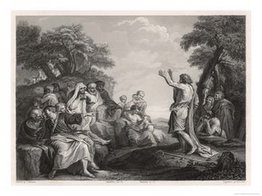
Posted by Picasa John the Baptist -Print found at Art.com

31 October 2006

The Sacrament of Penance

I had a discussion today with a pastor friend who had a question about forgiveness.

He had spoken to a Christian counselor about the topic of forgiveness. My friend is having to deal with former church members who have voiced a desire to reconcile.

"Saying, 'I'm sorry' is unBiblical," he said. I didn't know where he was going with this so I just listened. He went on to explain that saying that you are "sorry" is simply stating how you feel. "There is no forgiveness in simply stating facts," He said. " Something else is needed."

The evangelical Christian counselor went on to explain that confession of the wrong, asking for forgiveness and offering some sign of sincerity is the Biblical way to forgiveness.

Now, I must admit that I have had very little use for Christian counselors, but this guy is on to something that we as protestants have lost. Penance - the sign of sincerity. (Penance - a sacrament that includes contrition, confession, acceptance of punishment and absolution)

The protestant world sees "repentance" as necessary for forgiveness, and generally it is viewed among fundamentalists as an event that proceeds salvation. Some of the better protestant teachers make clear that repentance is a lifestyle of turning from sin and toward God (ie. changing your mind about sin and agreeing with God that it is bad). But, there is little to no mention of penance in the protestant circles.

Penance is often viewed by evangelicals as a means of "paying" for sin. This idea is rejected on good grounds as there simply is no way that we could "pay" for our sins. But, in the rejection of this extreme we have lost the Biblical role of confession in forgiveness. Just saying "I'm sorry" does not cut it, no matter how sincere you are.

A woman is caught in sin. She confesses her sins and asks for forgiveness. When Jesus offered forgiveness to the adulterous woman He gave her the penance of "...Go and sin no more." Always the call and command of Christ involves real and concrete actions. "Come, take up your cross and follow me."

As an example -- a young man goes to his elder and confesses his viewing of pornography on the internet. The elder brother prays for and comforts the young brother with the words of God. Then the elder brother prescribes the penance of putting a filter on the young brother's computer (or cutting off the internet altogether) in order to gage sincerity, but more importantly to help prevent the young man from repeating the same sin. Far from an "accountability partner" the young man has submitted to the authority of an elder and received an action to "prove" his repentance and aid the young man in sanctification. The young man now has the opportunity to walk in repentance and obey the command he has been given.

Listing my sins to God in some secret prayer and asking Him to forgive me is a cheap way of grace. Changing my mind about sin and telling God He is right is a nice idea that I suppose He appreciates. Paying for a candy bar I stole as a child makes me feel better.
However, actually confessing to someone who has authority over us, receiving God's word on the matter, performing in our bodies deeds of contrition and ceasing from the sins that plague us produce the grace of God in us in our quest for sanctification and the working out of our salvation. Confession, humility, action and obedience follow the disciples of Christ.

The Return of the prodigal Son by Rembrant van Rijn (Art.com)

19 October 2006

Quote of the Weak -- Communion

"What we do in our bodies and in our physical, mundane lives does matter, both for sin and grace."


"Many Christians look for signs and miracles. But there is no more miraculous sign than what happens during Holy Communion. Many Christians look for religious experience, but there is no experience as vivid as tasting. Evangelicals talk about 'receiving Christ', something that happened way back at their conversion. But in the Lord's Supper, as we are brought back to the Gospel again and again, we can continue to receive Christ.
Contemporary Christianity tends to be all internalized - a matter of my feelings, my inner life and my personal opinions... the Reformers stressed how salvation is extra nos, outside ourselves, accomplished in the life, death, and resurrection of Christ.
Contemporary Christians tend to be all spiritual. They often scorn the physical realm... reasoning like Gnostics that what they do with their bodies does not affect their spirits. They often construe God as being in their heads, and they treat Jesus like some imaginary friend...
What we do in our bodies and in our physical, mundane lives does matter, both for sin and grace."

-- Gene Edward Veith

05 October 2006

Quote of the Weak - The Great Commission


"Jesus told them to go and teach all nations. This was Jesus commanding before heaven and earth something of far greater significance than emphasizing evangelism. He is saying that the kingdom of God is open to the gentiles as well. Worship of God was no longer to be for the ceremonially clean chosen people of Israel, but for the whole world. So the Great Commission was a sweeping moment of revelation, not some emphasis on “beating the bushes” with tracts and door-to-door campaigns. We have missed the majesty of this passage if we assume it is merely about evangelistic efforts."

-- Chris Johnson (Saint Ambrose Blog)

"Therefore I take pleasure in infirmities, in reproaches, in needs, in persecutions, in distress, for Christ's sake. For when I am weak, then I am strong." (2 Corinthians 12:21)

21 September 2006

What architecture says about your beliefs.

A student friend, that attends a local Baptist college, came into my office the other day in dismay over a lecture concerning the placement of the pulpit in many liturgical (or high) churches. The professor had noted the emphasis that was placed on the Eucharist (or Communion) during the Middle Ages and the removal of the pulpit to the side. The professor deduced that the placement of the pulpit to the side was an external sign of a belief that placed communion at the center of worship and preaching as subordinate or secondary to it.

Truly many sacramental denominations do refer to communion as the "most blessed" sacrament and believe that it is the focus or climax of true worship. The implication from the Baptist professor was that this emphasis was wrong, and that preaching should take the place as the center of true worship and the only means of grace being dispensed. Therefore the pulpit takes center stage in most protestant churches.

The issue that troubled my young friend was the ramifications of such an observation if it were applied to most Baptist churches today. To begin with the typical exterior of most Baptist churches is a plain brick rectangle with a steeple - this speaks of a practicality and modesty that is sadly disappearing. The sanctuary is situated much like a theatre with rows of pews facing a stage (I understand this is a practical and traditional way of building that is common to most churches) and communicates to the adherent a sense of observation rather than participation. The altar table (or Lord's Supper table) is generally in the lowest center of the stage in most Baptist churches. Often the altar table holds an arrangement of flowers (since it is only used for Communion four times per year) and the flowers resemble those one would place on a grave or memorial (which is very much in keeping with the Baptist view that Communion is ONLY a memorial and symbolic act of obedience). Above the table the heavy wooden pulpit is exalted which not only serves a practical purpose, but send a clear message of the importance of the sermon (the new plastic pulpits irritate me and I am not sure of the message they send). Interestingly enough the choir is raised above the pulpit, but it is located behind the pulpit which communicates the importance of "worship" (which means singing in most Baptist churches) and its secondary place of support of the sermon. On either side of the choir you will find an American flag and the "Christian flag" -- this conveys the syncretistic beliefs of many Baptists and the belief that God's kingdom IS of this world. However, the most highly exalted place in the typical Baptist sanctuary is the baptistry -- what are we to understand from this symbolic placement? Using the logic and observations of the Baptist professor we could deduce that baptism is the most important aspect of Baptist life and in essence is the "most blessed sacrament" for the non-sacramental Baptists.

I love the Orthodox and their view that the church building (and indeed the entire service of worship) should convey Heaven to Earth. Much of the art and architecture sends a message of God's holiness and the Gospel message. The crucifixion often takes center stage, the ceilings reach to the heavens, saints remind us of faithfulness and incense give the aroma of otherworldliness. There is a sense of antiquity and presence in most Orthodox churches. There can also be found an inordinate adoration of the saints and the Virgin Mary, but this, too, communicates to the adherent the reality of the communion (or fellowship) of saints.

In my book the Episcopal Church takes the prize for protestant architecture. They generally have the most beautiful, oldest and traditional buildings in town. They are saying that they are ancient, they are here to stay, and they are concerned with beauty. Furthermore, Episcopal bell towers usually have REAL bells in them (please do not even get me started on fiberglass steeples with PA systems that play fake bells)!


At Christ Community Church we have inherited a beautiful sanctuary with a typical seating arrangement of pews. Stained glass windows along the wall depict various aspects of Trinitarian belief without attempting to depict the persons of the Trinity. The windows are merely symbolic and no attempt is made to depict the body of Jesus and are therefore not to be considered graven images. We are not opposed to printed or painted images or depictions of Christ as many icons can be found on our printed materials, but you would be hard pressed to call a bulletin cover an idol. Care is taken to appeal to the sense of sight while at the same time not allowing the worshiper to fixate on an image, but rather on Christ Himself who transcends our creativity, imagination and comprehension.

There are two works of art on the wall that are passages of scripture written in a Celtic style. These passages are theme verses from past years that speak of knowing Christ and who we are in Him.

The altar table is centrally located on the floor and flanked by kneeling benches. A Bible is placed in the center of the table with bread and wine on either side of the Bible. Hopefully this communicates the importance that is placed on the written word of God and the physical body of Christ who is the Word of God.

A single goblet is filled with red grape juice and a platter holds a single loaf of unleavened bread. The single cup and loaf are symbolic of the unity we share in Christ. (However, we currently serve the juice in individual cups -- it is a practice that is practical and in consideration of germs since real wine is not being used. I do not wish to critique our practice at this time as we are in the thoughtful process of change.) Communion is taken in a kneeling position at the end of the service and in response to the sermon. Communion (or the Eucharist), then, is the "altar call" issued to believers to respond to the liturgy, scripture reading, singing and preaching of Christ. It is more than memorial or merely a symbol; it is a proclamation of our faith in Him.

Two candle stands hold a total of six candles that are lit at the beginning of each service. Two represents "witness." Three is the number of the "Trinity". Six is the number for "man". Jesus is the "Light of the world". He says that we are the "light." At CCC, we are human witnesses of the Trinity that show forth light to the world.

Our pulpit is a simple wooden podium that is moved to the center floor for preaching and removed after the sermon. The wooden podium is symbolic of the cross, and it conveys a heaviness that plastic cannot. It is movable for practical reasons, but its placement on the floor with the congregation conveys the idea that the Word of God came to dwell with us and is preached among the people.

As we occupy a former Methodist church we have no baptistry. Therefore, our baptisms must take place outside of the confines of our four walls. This forces us to take the proclamation of the Gospel to an outdoor facility such as a pool. Unwittingly, we have been placed in the position of proclaiming the death, burial and resurrection of Christ both inside and outside of the church building. We are a congregation that proclaims Christ in our regular sacred gathering places, as well as our secular community.

The musicians are placed on the raised floor that is behind the altar table and at the foot of a stained glass window that depicts the cross. On the cross hang a crown of thorns and a wreath of laurel (symbolic of the crown of glory Christ gained through His suffering). While the slight elevation difference of the platform (or stage) is due to previous design and the placement is practical for instruments, I think it does convey a slightly misleading message that we place a higher emphasis on music. At CCC I think it would be true to say that we value each element of the worship service equally. All of the service is to be Christ exalting, and conducted at the foot of the Cross to the glory of God.

Quote of the Weak -- Church Architecture

"Architects could design church spaces that encourage people to use more of their senses than just sight or hearing. Think of the possibilities if architects were to consider the five senses not in isolation from one another but in harmony with each other.
God gave us five senses for a reason. People need to look, to listen, to touch, to taste, and to smell when they are praising God. "

-- Leonard Sweet (Church Architecture for the 21st Century, Christianity Today 1999)

While I disagree with most of his article (too much emphasis on innovation and video screens) I very much like his thoughts concerning the harmony of senses in worship.

20 September 2006

What did the Pope say?

The Pope's recent speech concerning peace and dialogue was the fuel for violence and threats from the Islamic world.

His words, a quote taken out of context, were an accusation that Mohammed taught growth by the sword and this teaching is wrong. Today the Pope said that this was not his view. Yet, the Muslim reaction around the world has served only to prove that Islam is a violent religion.

If you do read the Pope's speech it is a bit disturbing to see that the Pope seems to refers to the Koran in terms of scripture. If anything the Pope has been too benevolent by making Islam on the same plain as Christianity. Moderate Islamist have tried to calm their Fundamentalist brothers by pointing out that the Pope promotes Islam as one of the three great monotheistic religions, and that "thinking" Muslims are in some way in tune with God. Many say that the Pope is only speaking out against "radical" Islamist that have "hijacked Islam."

The belief in the equality of belief (at least as far as the "monotheistic" religions) is popular among many Christians these days, but you will find it is rare in the Islamic world.

One point that the Pope was trying to make is that you cannot force religion on anyone. Sure the Catholic Church has been guilty of trying, and various Christians throughout the history of the Church have tried coercions in many forms. But, listen to what the man is saying! He does not believe in forcing religion on people - either the Christian or Muslim religion.

All religions are not equal. To say that "Mohammed promoted peace" is about as smart as saying that "Jesus promoted violence".

Jews do not believe that God is triune. Muslims do not believe that God is triune. More than philosophy Christianity stands out above the other "monotheistic" religions pointing to Jesus as the Way, the Truth and the Life -- the only way to get to the Father. Christianity is not only monotheistic, but it is Trinitarian.

While I do not think that the Pope is God's voice on Earth it does trouble me to hear him apologize for the reaction that misinformed zealots (which seem to be the majority) had concerning his quote. Pope Benedict, please do not make apologies. Preach the Gospel, repentance and faith, and Christ as the only way!

05 September 2006

Quote of the Weak -- Compassion

"I want to send the signal to our enemy that you have aroused a compassionate and decent and mighty nation, and we're going to hunt you down."
-- President George W. Bush

"Therefore I take pleasure in infirmities, in reproaches, in needs, in persecutions, in distress, for Christ's sake. For when I am weak, then I am strong." (2 Corinthians 12:21)