I was reading a book today about a modern method of "reaching Muslims for Jesus." The method is based on using the Koran, Islamic tradition and custom, but somehow sneaking Jesus into the mix. The tactic is to Islamify the "gospel" and take away the offense. Change the name of Jesus or Yeshua to "Isa". Change God to Allah. Exchange the title "Jesus, Son of God" for "Isa, Spirit of God". The hopeful end result is "Isa Muslim" (someone who looks, speaks and acts like a Muslim; but has been "saved" by Isa). If you have read much of this blog I am sure you know how I feel about this so I will not belabor the point.
The interesting thing is the story for how this particular method was started. Years ago a young Muslim boy was evicted from his school and family for asking, "How do we know the Koran is true?" He was literally labeled as a "sinner". Some time later the boy was befriended by a foreign missionary who gave the young sinner a Bible. The boy read the Bible, repented and received faith in Jesus. He was baptized and began sharing the Bible with others. Eventually hundreds were saved by hearing the Gospel as revealed in Scripture. After some time one of the leaders in the movement was killed for his faith. Then a method was developed in an effort to "bridge the gap", and hopefully "remove the offense".
I found it ironic that the gift of a Bible was the catalyst for this move of God, however the method now is to use the Koran. The impetus for the young sinner to receive the gift was his expulsion from Islamic society. The young boy exited Islamic culture and found Jesus. The product of using the Bible was a true convert to Christ who was baptized in the name of the Father, the Son and the Holy Spirit.
Why try to develop a scheme for evangelism when God has given us His Word?
Showing posts with label Missions. Show all posts
Showing posts with label Missions. Show all posts
18 August 2010


17 August 2010
Words - are they important?
I am totally understanding the need to be careful in our language
with prospects, and even the general public. I do not agree with lying
about our intentions to evangelize, or deception to gain access to "closed areas".
However, I can see the wisdom of prudent language when living or
ministering in a hostile land.
Recently I was asked to teach a seminar to converted Muslims. I was instructed to not call Jesus the "Son of God" or to mention "Trinity". Furthermore I was told to call God "Allah" and use "Al Masheia" rather than "Jesus".
When we are dealing with converted Muslims I think it would be irresponsible
not to teach the whole counsel of Scripture and introduce our new brothers
to good theology. I know that Muslims have a problem with calling Jesus
the Son of God because they know it means that He is literally God's Son
and therefore divine. But, that is the point.
Some years ago I had a bad experience with the IMB's "expert" on Muslim
evangelization. He said that Muslim, Jews and Christians all worship the
same god. I asked, "But, doesn't Jesus say, 'I am the Way, the Truth and
the Life... no man comes to the Father except by me.'"? The teacher
rebuked me and said that I was only interested in arguing semantics. I
responded that I was not speaking of semantics at all, but the very words
of God. He had said that Jews and Muslims worship the God I worship, but they do not
know Jesus. SO, in what way can they come to the Father? How can they
worship a God that can only be approached through Christ Jesus? It was an argument over words, primarily the Word of God.
Recently I had a conversation with a Jehovah's Witness. In the past they
would have never said, "Jesus is LORD." However, they have recently
started saying, "Jesus is lord." Notice the difference? "LORD" =
God, Jehovah, the Word incarnate. "lord" = master, landowner, knight. When I
say "LORD" I proclaim that Jesus is God. When a JW says "lord" he is
saying "mister." Very subtle, and very dangerous. So it isn't just words I am
concerned about it is their meaning.
Allah is an Arabic word for the god of Mohammed. After thinking about it I might could use the term "allah" to refer to God, but not Allah. I think I would be compelled to clarify each time I said allah "notice the small 'a'." Or maybe "allah - I mean the triune God of the Universe". It would be difficult, but I think I could find some way to accommodate on this point.
Many languages have a word for god and another for God. I have heard Muslims in America use "God" when speaking of Allah.
Really this whole issue for me is resolved in the Trinity. The Nicene and
Apostle's creeds predate Islam by several hundred years, and I would think
that a converted Muslim would readily agree with these historically
orthodox statements. In fact, for several hundred years you would not be
considered Christian, nor be baptized if you did not profess a Trinitarian
creed. Christ's divinity is almost impossible to discuss without a
discussion of the Trinity.
If former Muslims had sound teaching in this area I think it
would give them a foundation that would be unshakable. Someone recently implied that the Trinity is too advanced for new believers, but I
would argue that a child could understand - indeed we must have the faith
of a child to enter into the Kingdom of Heaven. Maybe they would not be
able to explain, but I am confident that the Spirit (if indeed they have
the Spirit of Christ) would bear witness and they would shout "glory to
God" as the beauty of God's triune nature is proclaimed to them.
Often we make the mistake of not communicating deeper truth with new
converts. Somehow we think that a lack of formal education might mean
that they are too ignorant to grasp complex concepts. We think that
evangelism is too important to waste time on theology. However, we see
many examples in Scripture of men preparing for years (some for decades)
learning about God before serving Him.
Stephen Kennedy, Mission Coordinator for IOI, had a beautiful experience with a new evangelist. He came from the countryside and was very poorly educated. When he was joining IOI he had to sign a form that states that he agrees with the Apostle's
Creed. He did not know what it was, so Stephen read it to him. When he
heard what the creed contained he began to say, "Yes! Yes! Praise God!"
It was wonderful to see that the truth of this creed was readily accepted
by this dear brother. He was encouraged to find that this creed predated
his personal experience by over 1,700 years.
To contrast I heard a song tonight on Christian radio. The lyrics said
something like, "It isn't important that I understand some creed, or even
what I believe... I want to feel like I am falling in love." So, are we
saying that it does not really matter what we believe about God as long as
it feels right? Call Him Allah, or Baal, or Bob - Trinity, not trinity -
Jesus, Mohammed, Buddha - don't all roads lead to the same destination? -
words don't matter as long as it feels right, promotes peace and we keep
the numbers coming.
I cannot state emphatically enough how central the Trinity is to everything I might teach. I mean my name is PATRICK (as in Saint Patrick the Trinitarian theologian that won Ireland for Christ - and to this day symbols for the Trinity are plastered
everywhere in Ireland including on beer bottles) for goodness sakes!
with prospects, and even the general public. I do not agree with lying
about our intentions to evangelize, or deception to gain access to "closed areas".
However, I can see the wisdom of prudent language when living or
ministering in a hostile land.
Recently I was asked to teach a seminar to converted Muslims. I was instructed to not call Jesus the "Son of God" or to mention "Trinity". Furthermore I was told to call God "Allah" and use "Al Masheia" rather than "Jesus".
When we are dealing with converted Muslims I think it would be irresponsible
not to teach the whole counsel of Scripture and introduce our new brothers
to good theology. I know that Muslims have a problem with calling Jesus
the Son of God because they know it means that He is literally God's Son
and therefore divine. But, that is the point.
Some years ago I had a bad experience with the IMB's "expert" on Muslim
evangelization. He said that Muslim, Jews and Christians all worship the
same god. I asked, "But, doesn't Jesus say, 'I am the Way, the Truth and
the Life... no man comes to the Father except by me.'"? The teacher
rebuked me and said that I was only interested in arguing semantics. I
responded that I was not speaking of semantics at all, but the very words
of God. He had said that Jews and Muslims worship the God I worship, but they do not
know Jesus. SO, in what way can they come to the Father? How can they
worship a God that can only be approached through Christ Jesus? It was an argument over words, primarily the Word of God.
Recently I had a conversation with a Jehovah's Witness. In the past they
would have never said, "Jesus is LORD." However, they have recently
started saying, "Jesus is lord." Notice the difference? "LORD" =
God, Jehovah, the Word incarnate. "lord" = master, landowner, knight. When I
say "LORD" I proclaim that Jesus is God. When a JW says "lord" he is
saying "mister." Very subtle, and very dangerous. So it isn't just words I am
concerned about it is their meaning.
Allah is an Arabic word for the god of Mohammed. After thinking about it I might could use the term "allah" to refer to God, but not Allah. I think I would be compelled to clarify each time I said allah "notice the small 'a'." Or maybe "allah - I mean the triune God of the Universe". It would be difficult, but I think I could find some way to accommodate on this point.
Many languages have a word for god and another for God. I have heard Muslims in America use "God" when speaking of Allah.
Really this whole issue for me is resolved in the Trinity. The Nicene and
Apostle's creeds predate Islam by several hundred years, and I would think
that a converted Muslim would readily agree with these historically
orthodox statements. In fact, for several hundred years you would not be
considered Christian, nor be baptized if you did not profess a Trinitarian
creed. Christ's divinity is almost impossible to discuss without a
discussion of the Trinity.
If former Muslims had sound teaching in this area I think it
would give them a foundation that would be unshakable. Someone recently implied that the Trinity is too advanced for new believers, but I
would argue that a child could understand - indeed we must have the faith
of a child to enter into the Kingdom of Heaven. Maybe they would not be
able to explain, but I am confident that the Spirit (if indeed they have
the Spirit of Christ) would bear witness and they would shout "glory to
God" as the beauty of God's triune nature is proclaimed to them.
Often we make the mistake of not communicating deeper truth with new
converts. Somehow we think that a lack of formal education might mean
that they are too ignorant to grasp complex concepts. We think that
evangelism is too important to waste time on theology. However, we see
many examples in Scripture of men preparing for years (some for decades)
learning about God before serving Him.
Stephen Kennedy, Mission Coordinator for IOI, had a beautiful experience with a new evangelist. He came from the countryside and was very poorly educated. When he was joining IOI he had to sign a form that states that he agrees with the Apostle's
Creed. He did not know what it was, so Stephen read it to him. When he
heard what the creed contained he began to say, "Yes! Yes! Praise God!"
It was wonderful to see that the truth of this creed was readily accepted
by this dear brother. He was encouraged to find that this creed predated
his personal experience by over 1,700 years.
To contrast I heard a song tonight on Christian radio. The lyrics said
something like, "It isn't important that I understand some creed, or even
what I believe... I want to feel like I am falling in love." So, are we
saying that it does not really matter what we believe about God as long as
it feels right? Call Him Allah, or Baal, or Bob - Trinity, not trinity -
Jesus, Mohammed, Buddha - don't all roads lead to the same destination? -
words don't matter as long as it feels right, promotes peace and we keep
the numbers coming.
I cannot state emphatically enough how central the Trinity is to everything I might teach. I mean my name is PATRICK (as in Saint Patrick the Trinitarian theologian that won Ireland for Christ - and to this day symbols for the Trinity are plastered
everywhere in Ireland including on beer bottles) for goodness sakes!
09 August 2010
Lying to tell the Truth - Evangelistic Deception

For years I have protested the modern evangelical Christian practice of Evangelistic Deception (lying about our intentions in doing mission work). How can we share the Truth by lying?
Today it is painfully evident that we have only deceived ourselves - the Taliban knows exactly what the IAM (International Assistance Mission) workers were doing - promoting Christianity. It seems that the only people who are unaware that this is what the team was doing are the US Secretary of State, news outlets and the director of IAM.
Secretary of State Hillary Rodham Clinton condemned the attack and disputed the Taliban's assertion that the medical team was promoting Christianity.
"We also condemn the Taliban's transparent attempt to justify the unjustifiable by making false accusations about their activities in Afghanistan," Clinton said.
On the IAM website a statement was posted that reads, "Our faith motivates and inspires us - but we do not proselytize. We abide by the laws of Afghanistan. We are signatures of the Conduct for the International Red Cross and Red Crescent Movement and NGOs Disaster Response Programmes, in other words, that, 'aid will not be used to further a particular political or religious standpoint.' But more than that, our record speaks for itself." (Dirk R Frans)
What record is that? One of doing good in the name of Jesus the Christ and proclamation of the Gospel I would hope. For a true Christian your entire life is about the following of Christ which certainly does include "proselytizing."
It is a shame that this mass martydom is not being portrayed as exactly what it is. These people were killed because they were Christians ministering in the name of Jesus and hopeful that their witness might cause some to convert to Christ and proclaim Jesus as LORD. Instead the State department and even the ministry that sent the team is tying to convince the world that these people were "aid workers" and not "ministers."
It is time to stop fooling ourselves. If you go to another country in the name of Jesus you are a missionary! If you extend yourself on behalf of the poor for Jesus sake, and the Gospel - YOU ARE A MISSIONARY! You do not have to "preach," but I certainly am hopeful that many heard the Gospel through this team of missionaries. Certainly I do not propose that we wear little name plates that say "Missionary Bob," but we should never be ashamed of the fact that these people (at least one that I knew) were promoting Jesus!
28 June 2010
Should I get a tattoo?
I would like to begin by saying that I do not intend to offend, pass judgement or condemn anyone. My purpose is simply to look at the issue of Christians trying to decide on the issue of getting tattoos, and to help young believers think through the issues.
I have read a lot of opinion on the issue and the debates about Levitical law. Both sides seem to make many good arguments, but there is apparently no consensus on the Old Testament Biblical prohibition. Generally most people end up saying something like, "Christians are not 'under' the law..." and the response is generally, "well then is murder still wrong?" These type of arguments don't really get to the heart of the matter.
Indeed it is the heart where Christ's work is done and God's concern for the individual seems to be focused. The New Testament teaching on circumcision is clearly about God's concern for our heart. The Apostles agreed that Gentile believers be prohibited from eating blood and sexual immorality (both of which are Levitical laws, btw), and that Gentiles not be burdened with the extent of ceremonial law. The heart is God's concern, and a transformed heart will change behavior.
But, does the New Testament have anything to say about tattoos? The Apostle Paul goes to great lengths to command Gentile (and Jewish) believers that they should do everything within their power not to live "as the pagans do". Any behavior or meal that is associated with pagan behavior should be avoided. Christians should be know by the "Banner of Love". We should be "marked" with love. In other words, Pagans display their gods in carvings of stone, wood and skins -- Christians display our God through deeds of love and concern for our brothers. We should be known for our love.
This led me to investigate WHY many young Christians want tattoos. Obviously there are many reasons. One of the main reasons I hear is, "To witness Christ to others" or "so everyone will know I am a Christian". Kind of the Evangelical trump card - EVANGELISM.
One blogger said of his reasons for getting a tattoo, "To me it was the sense of taking control and doing what I want regardless of what anybody said or thought... Really what I think is it all boils down to is either you have the nerve to have ink carved into your body for life... That is why all of us with tattoos have a sense of brotherhood. Because each one of us knows the pain we went through for something we love (tattooing)."
So there we have it. "Taking control and doing what I want to do regardless of what anybody said or thought." As Christians we are to be intensely concerned with what others think, especially in regards to the perception of sinful behavior (real or imagined). Also, we are to be controlled by the Holy Spirit, not our fleshly desires.
While the Old Testament prohibition against tattoos might be up for debate I think it is clear that our society still views tattoos as "rebellious" and "to Hell with your opinion of me". A new term has evolved called "tattoo lifestyle" with magazines focusing on this evolving people group. (BTW, many Internet filters will block 'Tattoo Lifestyle' sights as "R rated"). I wonder how long it will be until people begin saying, concerning their desire to be tattooed, "I was born this way."
In conclusion I think the real issue concerns your heart. Why do you want a tattoo? Are you at all concerned about offending people for the sake of your freedom? Do you seriously want to do what pleases God, or what pleases you?
If you are truly concerned about lost souls or being identified with Christ then I would suggest a little soul searching. Is a tattoo glorifying to God? Will it offend others around you? Will it cause others to stumble?
The Apostle Paul put it this way, "So whatever you eat, drink or whatever you do, do it all for the glory of God. Do not cause anyone to stumble, whether Jews, Greeks or the church of God -- even as I try to please everybody in every way. For I am not seeking my own good, but the good of many, so that they may be saved." (I Corinthians 10:31-33)
I have read a lot of opinion on the issue and the debates about Levitical law. Both sides seem to make many good arguments, but there is apparently no consensus on the Old Testament Biblical prohibition. Generally most people end up saying something like, "Christians are not 'under' the law..." and the response is generally, "well then is murder still wrong?" These type of arguments don't really get to the heart of the matter.
Indeed it is the heart where Christ's work is done and God's concern for the individual seems to be focused. The New Testament teaching on circumcision is clearly about God's concern for our heart. The Apostles agreed that Gentile believers be prohibited from eating blood and sexual immorality (both of which are Levitical laws, btw), and that Gentiles not be burdened with the extent of ceremonial law. The heart is God's concern, and a transformed heart will change behavior.
But, does the New Testament have anything to say about tattoos? The Apostle Paul goes to great lengths to command Gentile (and Jewish) believers that they should do everything within their power not to live "as the pagans do". Any behavior or meal that is associated with pagan behavior should be avoided. Christians should be know by the "Banner of Love". We should be "marked" with love. In other words, Pagans display their gods in carvings of stone, wood and skins -- Christians display our God through deeds of love and concern for our brothers. We should be known for our love.
This led me to investigate WHY many young Christians want tattoos. Obviously there are many reasons. One of the main reasons I hear is, "To witness Christ to others" or "so everyone will know I am a Christian". Kind of the Evangelical trump card - EVANGELISM.
One blogger said of his reasons for getting a tattoo, "To me it was the sense of taking control and doing what I want regardless of what anybody said or thought... Really what I think is it all boils down to is either you have the nerve to have ink carved into your body for life... That is why all of us with tattoos have a sense of brotherhood. Because each one of us knows the pain we went through for something we love (tattooing)."
So there we have it. "Taking control and doing what I want to do regardless of what anybody said or thought." As Christians we are to be intensely concerned with what others think, especially in regards to the perception of sinful behavior (real or imagined). Also, we are to be controlled by the Holy Spirit, not our fleshly desires.
While the Old Testament prohibition against tattoos might be up for debate I think it is clear that our society still views tattoos as "rebellious" and "to Hell with your opinion of me". A new term has evolved called "tattoo lifestyle" with magazines focusing on this evolving people group. (BTW, many Internet filters will block 'Tattoo Lifestyle' sights as "R rated"). I wonder how long it will be until people begin saying, concerning their desire to be tattooed, "I was born this way."
In conclusion I think the real issue concerns your heart. Why do you want a tattoo? Are you at all concerned about offending people for the sake of your freedom? Do you seriously want to do what pleases God, or what pleases you?
If you are truly concerned about lost souls or being identified with Christ then I would suggest a little soul searching. Is a tattoo glorifying to God? Will it offend others around you? Will it cause others to stumble?
The Apostle Paul put it this way, "So whatever you eat, drink or whatever you do, do it all for the glory of God. Do not cause anyone to stumble, whether Jews, Greeks or the church of God -- even as I try to please everybody in every way. For I am not seeking my own good, but the good of many, so that they may be saved." (I Corinthians 10:31-33)
25 September 2009
A Mission to Share
 photo by Aaron Hardin
story by Tracie Simer
The Jackson Sun Friday, September 25, 2009
More than 12 years ago, Patrick Beard and his wife, Lana, moved to Ethiopia to become missionaries. Their dreams were ended when they had to return to the United States because she had a complicated pregnancy.
"I came home sick and beaten," he said. "I just knew our missions career was over."
However, he soon had a vision to help native missionaries and pastors like the ones he met in Ethiopia. That vision became Indigenous Outreach International, which celebrated 10 years of ministry Thursday night at Union University.
The ministry now supports 38 missionaries in Ethiopia, two in Brazil and one in Germany. The organization also provides a child care service to meet the needs of 100 poverty-stricken children in Ethiopia, Beard said.
After six weeks, the ministry was supporting seven missionaries for about $250 a month, Beard said.
"Indigenous Outreach International was born in suffering, carried out in simplicity and grounded in ancient roots," he said. "It's simple, really - we saw brothers in need, and we had compassion. We're simply doing what the apostle Paul did when he helped out young missionaries and churches."
Steven Kennedy, missions coordinator for the ministry, said the celebration was a way for people to learn more about what the ministry does and hear about its progress.
"We wanted to make the Jackson area aware of what this ministry is doing," he said. "Scripture says that good news from distant lands brings joy to the heart. We want to encourage (people) that God is working around the world and using people in Jackson to help around the world."
Beard shared the stories of a few missionaries who receive support and who have started their own ministries. Future projects include opening a cafe in Ethiopia to help raise funds and creating training centers for missionaries there, Beard said.
"God has done some amazing things," he said. "I hope we can continue to help others in need."
Kennedy said that aside from financial support, Indigenous Outreach International also offers technical, educational and prayer support.
Visit www.jacksonsun.com and share your thoughts.
- Tracie Simer, 731-425-9629THANK YOU TRACIE, AARON and the JACKSON SUN!!!
21 July 2009
Slowly by Slowly should go to press this week!
 I'm excited! The book has finally gone to press and I should have a final copy within a month. Hopefully by August it will be available on Amazon and others.
So much work for 108 pages!
09 September 2008
Walking the line

It is so hard to walk a line that leads down the middle of the road. Walton Padelford says, "The only thing you find in the middle of the road is a dead skunk with yellow paint across its back."
IOI was recently refused an audience with a missions committee because we are "too inclusive" and therefore not "orthodox". The funny thing is that in this democratic church I was never allowed to speak to the committee, nor was I ever asked one question. The conclusion was based solely on the fact that we work with so many denominations in Ethiopia, and our support comes from so many different churches in the USA.
The fact is IOI is an orthodox Christian missionary organization. As far as our Statement of Faith we site the Apostle’s and Nicene Creed, and believe the Bible to be inspired of God without error in the original manuscripts. Furthermore the ministers supported through IOI should preach the Gospel of the Lord Jesus Christ clearly as explained in scriptures such as I Corinthians 15:1-6 and be expecting the physical bodily return of the Lord Jesus Christ. This is about as orthodox a statement as one could possibly make.
The real issue it seems is not theology rather it is methodology. We are not charismatic enough for the Charismatic, we are too inclusive for the Cessationists. It is not the issue of revelation that is a problem (IOI holds to the classical Protestant view that there is no "new" revelation about God - Sola Scriptura, while at the same time giving honor to tradition when it complies with Scripture), rather it is speaking in tongues that plagues us as the unity breaker.
To be honest, most of what I see that is called a "work of God" seems to be nothing more than flesh on parade. Yet, I cannot deny that God still does miracles and there are many gifts that God gives. Scripture is clear that we are not to forbid speaking in tongues, furthermore Scripture is clear in how tongues are (or not) to be used publicly. We teach Biblical exercise of all the gifts to the glory of God and the edification of the Church. If the Church is not edified then cease.
Rather than promotion of a denominational flavor IOI is committed to the teaching of sound doctrine and sound methodology according to Scripture. It may not be possible to walk this line, but our law is the Law of Love. We see our brothers and sisters in need and we are striving to have compassion them. We seek to aid them financially and practically, as well as theologically and methodologically.
May God grant us His grace as we seek to fulfill this labor of love in unity of the Holy Spirit.
IOI was recently refused an audience with a missions committee because we are "too inclusive" and therefore not "orthodox". The funny thing is that in this democratic church I was never allowed to speak to the committee, nor was I ever asked one question. The conclusion was based solely on the fact that we work with so many denominations in Ethiopia, and our support comes from so many different churches in the USA.
The fact is IOI is an orthodox Christian missionary organization. As far as our Statement of Faith we site the Apostle’s and Nicene Creed, and believe the Bible to be inspired of God without error in the original manuscripts. Furthermore the ministers supported through IOI should preach the Gospel of the Lord Jesus Christ clearly as explained in scriptures such as I Corinthians 15:1-6 and be expecting the physical bodily return of the Lord Jesus Christ. This is about as orthodox a statement as one could possibly make.
The real issue it seems is not theology rather it is methodology. We are not charismatic enough for the Charismatic, we are too inclusive for the Cessationists. It is not the issue of revelation that is a problem (IOI holds to the classical Protestant view that there is no "new" revelation about God - Sola Scriptura, while at the same time giving honor to tradition when it complies with Scripture), rather it is speaking in tongues that plagues us as the unity breaker.
To be honest, most of what I see that is called a "work of God" seems to be nothing more than flesh on parade. Yet, I cannot deny that God still does miracles and there are many gifts that God gives. Scripture is clear that we are not to forbid speaking in tongues, furthermore Scripture is clear in how tongues are (or not) to be used publicly. We teach Biblical exercise of all the gifts to the glory of God and the edification of the Church. If the Church is not edified then cease.
Rather than promotion of a denominational flavor IOI is committed to the teaching of sound doctrine and sound methodology according to Scripture. It may not be possible to walk this line, but our law is the Law of Love. We see our brothers and sisters in need and we are striving to have compassion them. We seek to aid them financially and practically, as well as theologically and methodologically.
May God grant us His grace as we seek to fulfill this labor of love in unity of the Holy Spirit.
07 August 2008
Christian Beggars
 A lady selling vegetables on the streets of Addis Abeba.
I have never seen the righteous forsaken, nor God's seed begging for bread.
My office is at the church and we often have beggars come by seeking cash or a hotel room. Most of the time they tell me that they are Christian, just had some "bad luck".
When I probe deeper I find that these "Christians" don't actually belong to a church, and don't actually know other Christians that they could give me as a reference. So, what makes someone think they are Christian if they have NO fellowship. I am not saying you have to be listed on the roles of some organization, but I do believe you should have some contact with another Christian if you are in the Body of Christ.
For those who have a somewhat credible profession I have found that the "beggar" leaves my office as one who already had the answer in his hand, he just needed someone to help him see it. That is the beauty of life together. We have all things pertaining to life and godliness, we just forget, or can't see it.
Rebellion against God and pride are the main causes of begging that I have witnessed in America. Now, don't think I am saying this means we have no obligation to help, but it does make a difference in what type help we give.
When a man asks for bread we simply give him bread in the name of Jesus. No obligations, no expectation. We simply obey Jesus. However, when we are approached by a professed Christian that is begging we certainly owe this confessed brother a bit more than a simple meal -- we are after all our brother's keeper. For a Christian to be reduced to begging is a shame on the Church. For a Christian to be reduced to begging it is a shame for him. For a Christian to beg it is a reproach on Christ, and an accusation against God for not providing what He promised His children in food and clothing.
In the Old Testament we find a believer by the name of Job. He lost everything, but not through rebellion or disobedience. He was reduced to ashes. Yet, the only begging Job did was to beg of God for an answer. Apparently the believers who surrounded Job, although they judged him wrongly and gave horrible advice, apparently care for him physically. We see clearly that Job's friends sat with him and tried to aid him as best they could.
So, here we have it. The most "down on his luck" man in history, yet he continues to believe and God continues to care for him through his weak believing friends.
While the world is full of poor Christians there should be NO Christian beggars.
As I have traveled through out Ethiopia I have met many desperately poor Christians, but I have yet to see them utterly forsaken or reduced to begging. The churches are full of people who are poor, but they care for each other in ways that shame us in America. I have witnessed poverty stricken Christians in Ethiopia share their dirt floor with even poorer Christians.
The next time someone begs of you on the basis of being a Christian brother I encourage you to question this brother. Don't simply tell him to be "warm and filled", but take a moment to find out why he does not attend worship or have fellowship with anyone who can share in his sufferings. You may find a lair and a thief, but you may find a brother that needs a prophetic word to go home and be reconciled.
When we view the Christian beggar as our brother then we see that God has given us an opportunity to share in the love of God in the care of His children. We can "get in on what God is doing" by giving to the poor and having mercy on those who least "deserve it".
02 July 2008

16 April 2008
The Mission of Compassion

"If you see your brother in need and have not compassion - the love of God does not live in you." (I John 3:17)
From what I understand there are Christians who are persecuted every day in this world. I personally know hundreds of believers in Ethiopia alone who need help. How is it that Christians in the most prosperous nation in the world and the richest congregations turn a blind eye to our suffering brethren? There should be a multitude of ministries that seek to help poor, imprisoned and naked Christians.
It often seems that if a mission is interested in the poor it is only to draw them in to their programs so that they can count heads. I don't doubt the sincerity of these organizations I only doubt their gospel and its mission. Feeding the poor becomes a "method of evangelizing" all the while we expect believers to "pull themselves up by their boot straps." It is wicked. For some it would seem to be better to stay a "seeker" and take advantage of "christian charity" rather than become a believer left to fend for yourself.
The good news is that many of these missions are actually preaching the death, burial and Resurrection of Jesus the Christ. I have witnessed churches who explode in numbers and zeal when they are first planted, and I see many who's lives are changed indeed. The problem is that in the years to come their zeal grows cold and soon they become much like the churches that planted them concerned with growing their programs rather than meeting the needs of those around them.
It often seems that if a mission is interested in the poor it is only to draw them in to their programs so that they can count heads. I don't doubt the sincerity of these organizations I only doubt their gospel and its mission. Feeding the poor becomes a "method of evangelizing" all the while we expect believers to "pull themselves up by their boot straps." It is wicked. For some it would seem to be better to stay a "seeker" and take advantage of "christian charity" rather than become a believer left to fend for yourself.
The good news is that many of these missions are actually preaching the death, burial and Resurrection of Jesus the Christ. I have witnessed churches who explode in numbers and zeal when they are first planted, and I see many who's lives are changed indeed. The problem is that in the years to come their zeal grows cold and soon they become much like the churches that planted them concerned with growing their programs rather than meeting the needs of those around them.
Conversely there are missions who have lost the Truth and have become nothing more than social aid agencies that help salve the conscience of wealth Westerners by feeding multitudes of poor. There are no requirements for aid or belonging, no Gospel message. Just "pure" charity with no strings attached.
What I am trying to say is that both of these views are extreme, and neither is truly bringing God's Kingdom to this earth.
I am growing increasingly confident that missions is something that must be done in community. I believe that Christ's Kingdom is being established on this planet, that His will is being done on Earth as it is in Heaven. This is happening as more and more congregations begin to truly care for each other and become known for their love rather than their buildings or programs. As believers are encouraged to work out their salvation through the practice of God given gifts the world sees the Light and tastes the Salt.
Who in America has not heard that "Jesus died for your sins"? But, how many in America see the Body of Christ (the Church) loving God by loving each other?
How many have heard the Gospel which is costly? How many have heard that it will cost them everything to follow Christ? The Gospel has become an event rather than total life transformation.
All too often our gospel is offensive, not because of Christ, but because it lacks Christ. Jesus died for you. Say this prayer, go to church, give your tithe (of course spend the rest on yourself), obey God and you will prosper! God just wants you to stop doing bad things. The only thing God requires is that you receive His free gift that He offers. "All you have to do is accept." -- It is a lie!
Jesus not only died for you He rose from the dead in a real body! He demands that we believe. He commands us to repent (a constant adjustment of our thoughts to conform with the will of God rather than doing what we want). What God requires is obedience!
The book of James (which many would remove from Scripture) states plainly that faith without works is dead. First John states clearly that we must "lay down our lives for the brethren". Jude warns of those who feasted with believers, yet only wanted gain for themselves. Acts tells of those who wanted to follow Christ in a effort to gain magical powers or miracles, only to find themselves being cut off. Colossians warns about false religion that is worked out in ascetic harshness, rather than overflowing love for the Church that comes from a relationship with the Triune God. Paul greeting the Thessalonians, who not only speak the Gospel, but their "faith goes out before them" -- even so in chapter 4 he says, "you have been taught by God to love one another." In Timothy we see command after command about humility and submission because of the great love of God -- the good "fight" is one of love, faith godliness, gentleness -- and a strict command from God for wealthy Christians to be "rich in good deeds, liberal in giving." These are not options they are commands!
Nowhere in Scripture are we commanded to build big buildings, provide sporting events or any of the plethora of activities that are associated with "church" (not that there is anything inherently wrong with these things). However, we are commanded repeatedly to be generous to poor believers. It is tragic that aiding believers is so low a priority that it is not even on the budget of many congregations.
(Not suggesting that we aid laziness or that we enable people to be leaches on the Church -- see following posts).
There simply is no way around it -- we will be judged according to our deeds! Without faith in Christ we are lost, and without works we have no faith. Dietrich Bonhoeffer said, "Only those who believe can obey, and only those who obey can believe."
It is not our message or our words that we are known by, it is our fruit. Our fruit should be love, joy, peace, patience, kindness, goodness, faithfulness, gentleness and self-control. As unbelievers see the fruit they are amazed, as they hear the Gospel they are offended, and as God gives faith they are saved. Those who were outside are inside and become part of the Body of God's great love.
19 March 2008
People Groups or People?

I am evangelical, but I think the emphesis on "church planting movements" and "people groups" focus is fairly anti-Christ. The IMB has a very short-sighted approach to missions that is driven by bad theology (or more precisely bad eschatology - ie. Jesus can't come back until the last people group has been "reached").
In my opinion the focus on people groups rather than people has been a detrimental approach that has caused us to look at the Church in America as a "resource" and the people in other countries as a "product". We don't have time to focus on an individual and his needs -- we are trying to open the door for Jesus to return. We have a "heart for the Oromo people", but we don't actually care about the well being of Tesguy and his family. I was actually told once in a IMB training session, "We can't waste time hunting birds -- we want the elephant."
The focus on evangelism rather than Christ has produced an emasculated Gospel that has reduced a holy God to a pathetic creator who has lost control and is now begging people to convert. Discipleship has been reduced to "evangelism" for the sake of more evangelism. Christ's demands on us have been reduced to "just receive the free gift."
No doubt some good work is being done by the IMB. There are missionaries, many who are known as disobedient, who are doing good works. But, as you can tell, I have very little impathy with their denominational approach and strategy. I hate secret agent missions (lying and decet to tell the "truth"), the "culturally sensitive gospel" (removing Christ - the stumbling block), the "western gospel" (Jesus needs you - you need to be like us - just believe and God will fix all your problems), and any other gospel than Christ crucified.
Christ has commanded us to repent, believe, and to take up our cross and follow Him. Many American mission agencies seem to have forgotten that the free grace we preach has come, and continues to come, at a very high price.
30 May 2007
Updates to ioi blog
For those of you interested in the ministry of IOI --
The www.ioiusa.blogspot.com blog is updated monthly. Also, we have a new URL for our website at www.ioiusa.org which I hope is much more user friendly. Check it out when you have an opportunity.
Also, for those interested in our home renovations check out www.universal-design-home.blogspot.com
The www.ioiusa.blogspot.com blog is updated monthly. Also, we have a new URL for our website at www.ioiusa.org which I hope is much more user friendly. Check it out when you have an opportunity.
Also, for those interested in our home renovations check out www.universal-design-home.blogspot.com
16 May 2007
Dependency
I have copied the article in its entirety and only added a few comments which are in red. I wanted to include the entire article to be fair.
DEPENDENCY ISSUES AND EXTENDING GOD’S KINGDOM
South America Region, International Mission Board, SBC
The concept of dependence is an important and vital part of the Christian life. We are taught in Scripture to be completely and totally dependent on God. Therefore, to foster a dependence on other things, even as they relate to Kingdom Extension, runs contrary to good missiological approaches and sound Scriptural principles. (Strange, no mention of the Church being like a body, which would imply interdependence on each other).
We are called, committed and accountable to go and to make disciples of the nations, even to the uttermost ends of the earth. Thankfully, many Southern Baptists and others have been and continue to be involved in that Kingdom task. The purpose of this position paper is to help avoid practices that are paternalistic (Application of the ideas that follow are not only "paternalistic" they are supremest, ie. "because we are greater...") and those that create dependency because such practices hinder Kingdom growth.
Some Relevant Scripture
We Baptists hold a strong belief that every individual is directly accountable to Almighty God to obey, worship and serve Him and that the Lord directs and empowers each individual to accomplish that which He has purposed. His church leadership is instructed "to prepare God’s people for works of service, so that the body of Christ may be built up until we all reach unity in the faith and in the knowledge of the Son of God and become mature, attaining to the whole measure of the fullness of Christ." (Eph. 4:12&13) (I think it strange to divorce the individual from the "body of Christ," and apply a scripture that clearly is addressing "you all" and interpret the passage to be to the individual. Aren't Baptists supposed to be the ones who believe in the literal translation of Scripture?)
Jesus sent out the disciples to the lost sheep of Israel with authority and strong words of encouragement to preach the gospel, heal the sick, raise the dead, cleanse the lepers, and to drive out demons because they were to freely give of what they had freely received. The disciples were instructed not to take along any gold, or silver, or copper money and no luggage, because "the worker is worth his keep," (obviously meant to apply to the little dark skinned people, but not to SBC missionaries who live in fine homes, drive new SUVs and have servants) (Matt. 10:1-10) which idea is expressed in today’s mission phraseology as "the resources are in the harvest." (ie. "why should we use our money to help the poor?" HOW RIDICULOUS! Can you imagine Jesus saying, "heal thyself" or "I have come that you might find the life that you already have"?) Matthew 10:11-20 indicates that the disciples were not expected to have an altogether easy entrance into their mission world. Instead of ease, they were instructed to expect hardships of rejection, betrayal, arrests and trials (Unlike SBC missionaries to the Middle East who are taught to lie about their presence in the country and do everything possible to avoid any rejection). Jesus sent them out "like sheep among wolves." Jesus also gave similar instructions to the 72 whom he sent out later. (Luke 10:1-12) Later, in Luke 22:35-36, even when Jesus gave further instructions indicating the need for provisions of a money belt, a bag and a sword, these provisions were the simplest ones that allowed the worker to be sent out for ministry.
The Apostle Paul traveled throughout most of the known world of the Roman Empire, working, teaching, writing, preaching, suffering various trials and hardships, and witnessing, with almost no mention made of any financial or material aid for those receiving the witness. He did, of course, collect an offering for the faithful in Jerusalem who were suffering a lack of necessities, probably as a result of persecution. (So admittedly the Apostle Paul collected money for the poor in another country. Just a reminder - that is the thing that this article is preaching against.) Paul even worked to earn his own livelihood when the circumstances indicated. (Acts 18:3) The Apostle Paul in 1st Corinthians 11:16-33 describes in his own words what he suffered in order that others would hear the good news of salvation in Christ.
God was in Christ Jesus reconciling the world to himself, but, even though it was God the Father who was taking the initiative; it was Christ the Son who was required to pay the price of obedience that was set before him by God, the Father. (2 Cor. 5:18-21) (Any theologians have a problem with this statement, or is it just me?)
It is quite evident from the Biblical texts cited, and many others, that some of the principal ingredients for reaching the lost world were personal testimony of faith, sharing the gospel message, challenging the lost to believe, and paying the price of obedience along with some cautions about the role material resources would play. (Oh yes, quite evident in deed. Ahem. Now all you little people without Bible degrees take a seat and get ready for this great exposition).
Missionary Leadership Insight
The following insights were shared by Dr. Jerry Rankin in the September 1997 issue of The Commission magazine, a Southern Baptist International Mission Board publication, and they are echoed by many leaders in missions (who mostly live in really nice homes in America and jobs depend on American money given by American Christians; but are real experts on the sufferings of the developing world).
North Americans often see poverty and economic disparity overseas and, out of a compassionate desire to help, they wish to share of their own abundant resources. However, they are often less than fully aware of the dangers of a valid spiritual ministry (I think that is an interesting phrase, "valid spiritual ministry") degenerating into material assistance (assistance - that 's bad, right? Sounds too much like welfare. Sounds liberal or Communist or something wholly unAmerican), and how creating dependency can be detrimental to the health and growth of Kingdom efforts (Clearly the IMB are not Calvinists - at least we can be thankful for something. I mean we scoff at global warming because Man cannot destroy God's planet, but apparently individual men can harm God's Kingdom).
The International Mission Board is firmly committed to indigenous principles of missions in the work of evangelism and church planting overseas ("yes, yes firmly committed with words, lots of words, and programs, and Veggie Tales - but not money that might hurt somebody). The churches that result must have members who are growing to maturity in Christ, reaching the lost around them with the gospel, and seeing new congregations resulting from their efforts. "It is a mistake to try to accelerate growth by an infusion of financial aid to build churches and support pastors…Well intended financial assistance too often creates dependence and handicaps the initiative and faith essential for spontaneous growth (I don't know -- seems like it works in America. Funny how the Home Mission Board supports pastors, builds buildings, etc. here in the good ole USA, but when it comes to the darkies in Africa...)." When "Americans subsidize the work of churches and pastors on the mission field (Oh, I see the "mission field") potential growth is stalled because of a mind-set that it can‘t be done unless an overseas benefactor provides the funds." In such a case, the local congregation stops assuming responsibility before the Lord for the work and begins to rely more on the human benefactors to take care of them (I suppose that is why we pay our pastors here in America, because we want them to be dependant on us?). "People are deprived of growing in faith, learning to depend on God and discovering that He is sufficient for all their needs."
"Subsidy propagates a Western model of a church that sees a building and a paid pastor as essential rather than encouraging a reproducible biblical model of the church as gathered believers responsible to and for their own leadership and facilities." (Again a statement of "fact" that has no reference in reality. I personally know of churches that have been helped greatly by "western $" and they don't look or act "western". Furthermore, isn't this actually condemning the very churches that support the IMB? Don't all SBC churches in America see a building and a paid pastor as essential?)
Dr. Rankin concludes that the "Explosive growth ….around the world would never have occurred if a pattern of subsidy and dependence had been created. Unfortunately, well-intentioned help on many fields has handicapped long-term potential growth." (Hasn't most of the growth in the past 150 years been subsidized by the West? I don't get it. Has the Church grown or not? And if it has doesn't it disprove what Dr. Rankin is saying?)
Also, Dr. David Garrison has intensely studied church planting movements around the world and concludes that the use of outside resources to construct church buildings and to pay pastors’ salaries actually creates barriers to the realization of a church planting movement, because it saps local initiative. He goes on to state that these actions may produce some impressive short-term results, but they will also produce a long-term dead end. (I sorry I have no idea who this guy is, but I am willing to call him on the carpet here and ask for some statistics. Again we have a great learned man who states a "fact" based on his "intense study" and we are expected to believe him with no verification of what he says. Again, I can show you churches that are thriving and growing, and have actually been encouraged to give more when they learn that churches in America are willing to help them. How I wish there was a missions version of Snopes.com).
In his book, Church Planting Movements: How God Is Redeeming a Lost World, Garrison lists some serious obstacles to the blossoming of a church planting movement; in fact, he designates them as seven deadly sins (Oh, God forbid that we give to the poor! What a sin! -- WOE TO THOSE WHO CALL GOOD EVIL!) which create barriers against a church planting movement. Two of them are especially pertinent for the issue being treated here.
One he names the "The Devil’s Candy." "The Devil’s Candy is deceptive, because it refers to good things that have real value" but they can hinder reaching the lost with the gospel. In the mission setting, it is the use of outside money for paying pastors and church building construction. Garrison writes that when outside (Outside? That would be "para" like "para-church"? Like a mission organization? COME ON! It is ONE Church Dr. Garrison, there is NO "outside"!) funds are used to hire pastors and construct church buildings, there may be some quick results but sustainable growth will not be realized.
A second barrier for a church planting movement is what Garrison calls "Alien Abduction (Who’s in charge here?) He continues, "There are at least three ways that Church Planting Movements can succumb to alien abduction: 1) by forcing new believers to exchange their cultural forms for alien ones, 2) by creating a welfare state (there are those liberals again!) of foreign dependency, and 3) by injecting foreign elements into the life of the church that cannot be locally reproduced."
So, when is it "help that helps" and when is it "help that hurts?" That is the question that requires much prayer, study and application of the admonition of Jesus to the twelve and the seventy when he sent them out. "Be ye therefore wise as serpents, and harmless as doves." (Matt. 10:16 KJV) How can one be wise in Kingdom service in a mission setting? By praying relevant questions through to constructive answers. (I know lets read I John 3. No, why don't we just pray and ask God to enlighten us.)
The following are some relevant prayer topics for anyone or a group committing to ministry on a mission field and who wishes to wisely invest time and resources.
Are we truly partners in Christ with local believers with commensurate responsibilities in this mission effort? (Well if your the IMB I don't know if you are a partner, but you surely are the boss).
Do our ministry and resources enhance discipleship growth and commitment? (Maybe you could have Dr Garrison do intensive study on the subject?)
Will our ministry result in disciples absolutely committed to reaching others? (Would it be a bad thing if our disciples were "absolutely committed" to worship of God?)
What would be the signs that dependency is being fostered? (Maybe no one having the intestinal fortitude to tell you and all your "resources" to take a hike?)
Who is really making the decisions about ministry here? (Some dude in Richmond, of course.)
Would the ministry continue if the outside, or foreign, resources were suddenly withdrawn? (If it is from God, and He wants it to continue).
Are we seeking the Lord’s leadership in praying alongside our national partners? (While I am sure that it must happen -- of all the mission sponsored prayer meetings I attended while an SBC missionary I can't remember one prayer meeting that involved nationals - that would have been far too risky.)
Do our ministry and resources foster more dependence upon the Lord or more dependence upon us?
Here are some additional questions that can be used volunteers:
Are we fostering a welfare state? (Again that liberal question. Is welfare that evil? My handicapped daughter gets "welfare" and thank God for it! I have no idea how she would get the medical care she needed if it weren't for "welfare". But, I'm white and work so obviously they don't mean me.)
Are we funding something that they can’t fund for themselves? (If they could fund it themselves why would we give money to pay for it??? Are you suggesting that we only give to those who have and not to those who do not have?)
If they can’t fund it themselves, is there a way it can be done that would be affordable to them/within their cultural and economic means?
If they can’t fund it themselves, are we leaving them with a financial burden to maintain it after we’re gone? So many Latino Baptists say they can’t afford to do missions because their funds are tied up in maintaining buildings, campgrounds, seminaries, and other American-spawned institutions. (Oh the poor Latinos who don't have enough good sense to sell their liabilities and turn them into assets.)
Conclusion (I'm tired of stating the obvious - I will leave you to come to your own conclusions).
The South America Region leadership, after study and prayer, has sensed a responsibility to lead missionaries and volunteers to seek ministries that have been proven to facilitate church planting movements and that avoid, as much as possible, the potential for creating dependency.
In light of the information presented in this position paper, missionaries and volunteers serving in the South America Region of the International Mission Board are strongly urged to study and pray through the issue of dependency in missions and what it means for ministry involvement. This is especially important as it relates to the construction of church buildings and subsidy, such as paying salaries of either national pastors or national missionaries, as well as purchasing or providing other material resources that are not available locally for starting churches. Because of the importance of these issues, we also ask for your understanding as we implement a guideline in the region, beginning in 2006, of no longer approving volunteer projects that involve the construction of church buildings, as well as no longer transferring funds through our offices that have as their designation the construction of church buildings, the paying of national pastor’s or national missionary’s salaries, or other financial support that creates dependency.
What are some construction alternatives for those volunteers who desire to do construction and/or provide other material resources, and, at the same time, avoid creating dependency? There are many ways that volunteers can be involved in construction projects that do not create dependency but rather impact lostness among communities and families with whom we are working. Examples of such projects are: Community Projects (School repair and renovation, Handicapped access, Stairs and Sidewalk installation, Clean water projects, Irrigation Systems, Public Bathrooms, Bus Stop Shelters, Playgrounds and Parks, Landscaping Projects) Single Family Dwellings (Painting, Roofing and repair, Cabinet building, Bathroom installation and repairs, Plumbing, Window installation and repairs, Electrical installation and repairs) Human Needs and Disaster Relief Projects. Such projects express the love of God and open doors and hearts to the gospel message.
Bibliography and Notes
Scripture quotations, unless otherwise indicated, are from the New International Version of the Bible.
Garrison, David. Church Planting Movements, booklet, also online at www.imb.org/CPM.
Garrison, David. Church Planting Movements: How God Is Redeeming a Lost World. Midlothian, VA: WIGTake Resources, 2004, pages 240-257 especially. See www.churchplantingmovements.com.
International Centre for Excellence in Leadership. Strategic Engagement of Volunteers, pages 76-96. Richmond: International Mission Board, SBC, 2000.
McQuilkin, Robertson. "Avoiding Dependency" in Mission Frontiers magazine, August 1999, p. 38.
Rankin, Jerry. "Help That Hurts" in The Commission magazine, September 1997.
DEPENDENCY ISSUES AND EXTENDING GOD’S KINGDOM
South America Region, International Mission Board, SBC
The concept of dependence is an important and vital part of the Christian life. We are taught in Scripture to be completely and totally dependent on God. Therefore, to foster a dependence on other things, even as they relate to Kingdom Extension, runs contrary to good missiological approaches and sound Scriptural principles. (Strange, no mention of the Church being like a body, which would imply interdependence on each other).
We are called, committed and accountable to go and to make disciples of the nations, even to the uttermost ends of the earth. Thankfully, many Southern Baptists and others have been and continue to be involved in that Kingdom task. The purpose of this position paper is to help avoid practices that are paternalistic (Application of the ideas that follow are not only "paternalistic" they are supremest, ie. "because we are greater...") and those that create dependency because such practices hinder Kingdom growth.
Some Relevant Scripture
We Baptists hold a strong belief that every individual is directly accountable to Almighty God to obey, worship and serve Him and that the Lord directs and empowers each individual to accomplish that which He has purposed. His church leadership is instructed "to prepare God’s people for works of service, so that the body of Christ may be built up until we all reach unity in the faith and in the knowledge of the Son of God and become mature, attaining to the whole measure of the fullness of Christ." (Eph. 4:12&13) (I think it strange to divorce the individual from the "body of Christ," and apply a scripture that clearly is addressing "you all" and interpret the passage to be to the individual. Aren't Baptists supposed to be the ones who believe in the literal translation of Scripture?)
Jesus sent out the disciples to the lost sheep of Israel with authority and strong words of encouragement to preach the gospel, heal the sick, raise the dead, cleanse the lepers, and to drive out demons because they were to freely give of what they had freely received. The disciples were instructed not to take along any gold, or silver, or copper money and no luggage, because "the worker is worth his keep," (obviously meant to apply to the little dark skinned people, but not to SBC missionaries who live in fine homes, drive new SUVs and have servants) (Matt. 10:1-10) which idea is expressed in today’s mission phraseology as "the resources are in the harvest." (ie. "why should we use our money to help the poor?" HOW RIDICULOUS! Can you imagine Jesus saying, "heal thyself" or "I have come that you might find the life that you already have"?) Matthew 10:11-20 indicates that the disciples were not expected to have an altogether easy entrance into their mission world. Instead of ease, they were instructed to expect hardships of rejection, betrayal, arrests and trials (Unlike SBC missionaries to the Middle East who are taught to lie about their presence in the country and do everything possible to avoid any rejection). Jesus sent them out "like sheep among wolves." Jesus also gave similar instructions to the 72 whom he sent out later. (Luke 10:1-12) Later, in Luke 22:35-36, even when Jesus gave further instructions indicating the need for provisions of a money belt, a bag and a sword, these provisions were the simplest ones that allowed the worker to be sent out for ministry.
The Apostle Paul traveled throughout most of the known world of the Roman Empire, working, teaching, writing, preaching, suffering various trials and hardships, and witnessing, with almost no mention made of any financial or material aid for those receiving the witness. He did, of course, collect an offering for the faithful in Jerusalem who were suffering a lack of necessities, probably as a result of persecution. (So admittedly the Apostle Paul collected money for the poor in another country. Just a reminder - that is the thing that this article is preaching against.) Paul even worked to earn his own livelihood when the circumstances indicated. (Acts 18:3) The Apostle Paul in 1st Corinthians 11:16-33 describes in his own words what he suffered in order that others would hear the good news of salvation in Christ.
God was in Christ Jesus reconciling the world to himself, but, even though it was God the Father who was taking the initiative; it was Christ the Son who was required to pay the price of obedience that was set before him by God, the Father. (2 Cor. 5:18-21) (Any theologians have a problem with this statement, or is it just me?)
It is quite evident from the Biblical texts cited, and many others, that some of the principal ingredients for reaching the lost world were personal testimony of faith, sharing the gospel message, challenging the lost to believe, and paying the price of obedience along with some cautions about the role material resources would play. (Oh yes, quite evident in deed. Ahem. Now all you little people without Bible degrees take a seat and get ready for this great exposition).
Missionary Leadership Insight
The following insights were shared by Dr. Jerry Rankin in the September 1997 issue of The Commission magazine, a Southern Baptist International Mission Board publication, and they are echoed by many leaders in missions (who mostly live in really nice homes in America and jobs depend on American money given by American Christians; but are real experts on the sufferings of the developing world).
North Americans often see poverty and economic disparity overseas and, out of a compassionate desire to help, they wish to share of their own abundant resources. However, they are often less than fully aware of the dangers of a valid spiritual ministry (I think that is an interesting phrase, "valid spiritual ministry") degenerating into material assistance (assistance - that 's bad, right? Sounds too much like welfare. Sounds liberal or Communist or something wholly unAmerican), and how creating dependency can be detrimental to the health and growth of Kingdom efforts (Clearly the IMB are not Calvinists - at least we can be thankful for something. I mean we scoff at global warming because Man cannot destroy God's planet, but apparently individual men can harm God's Kingdom).
The International Mission Board is firmly committed to indigenous principles of missions in the work of evangelism and church planting overseas ("yes, yes firmly committed with words, lots of words, and programs, and Veggie Tales - but not money that might hurt somebody). The churches that result must have members who are growing to maturity in Christ, reaching the lost around them with the gospel, and seeing new congregations resulting from their efforts. "It is a mistake to try to accelerate growth by an infusion of financial aid to build churches and support pastors…Well intended financial assistance too often creates dependence and handicaps the initiative and faith essential for spontaneous growth (I don't know -- seems like it works in America. Funny how the Home Mission Board supports pastors, builds buildings, etc. here in the good ole USA, but when it comes to the darkies in Africa...)." When "Americans subsidize the work of churches and pastors on the mission field (Oh, I see the "mission field") potential growth is stalled because of a mind-set that it can‘t be done unless an overseas benefactor provides the funds." In such a case, the local congregation stops assuming responsibility before the Lord for the work and begins to rely more on the human benefactors to take care of them (I suppose that is why we pay our pastors here in America, because we want them to be dependant on us?). "People are deprived of growing in faith, learning to depend on God and discovering that He is sufficient for all their needs."
"Subsidy propagates a Western model of a church that sees a building and a paid pastor as essential rather than encouraging a reproducible biblical model of the church as gathered believers responsible to and for their own leadership and facilities." (Again a statement of "fact" that has no reference in reality. I personally know of churches that have been helped greatly by "western $" and they don't look or act "western". Furthermore, isn't this actually condemning the very churches that support the IMB? Don't all SBC churches in America see a building and a paid pastor as essential?)
Dr. Rankin concludes that the "Explosive growth ….around the world would never have occurred if a pattern of subsidy and dependence had been created. Unfortunately, well-intentioned help on many fields has handicapped long-term potential growth." (Hasn't most of the growth in the past 150 years been subsidized by the West? I don't get it. Has the Church grown or not? And if it has doesn't it disprove what Dr. Rankin is saying?)
Also, Dr. David Garrison has intensely studied church planting movements around the world and concludes that the use of outside resources to construct church buildings and to pay pastors’ salaries actually creates barriers to the realization of a church planting movement, because it saps local initiative. He goes on to state that these actions may produce some impressive short-term results, but they will also produce a long-term dead end. (I sorry I have no idea who this guy is, but I am willing to call him on the carpet here and ask for some statistics. Again we have a great learned man who states a "fact" based on his "intense study" and we are expected to believe him with no verification of what he says. Again, I can show you churches that are thriving and growing, and have actually been encouraged to give more when they learn that churches in America are willing to help them. How I wish there was a missions version of Snopes.com).
In his book, Church Planting Movements: How God Is Redeeming a Lost World, Garrison lists some serious obstacles to the blossoming of a church planting movement; in fact, he designates them as seven deadly sins (Oh, God forbid that we give to the poor! What a sin! -- WOE TO THOSE WHO CALL GOOD EVIL!) which create barriers against a church planting movement. Two of them are especially pertinent for the issue being treated here.
One he names the "The Devil’s Candy." "The Devil’s Candy is deceptive, because it refers to good things that have real value" but they can hinder reaching the lost with the gospel. In the mission setting, it is the use of outside money for paying pastors and church building construction. Garrison writes that when outside (Outside? That would be "para" like "para-church"? Like a mission organization? COME ON! It is ONE Church Dr. Garrison, there is NO "outside"!) funds are used to hire pastors and construct church buildings, there may be some quick results but sustainable growth will not be realized.
A second barrier for a church planting movement is what Garrison calls "Alien Abduction (Who’s in charge here?) He continues, "There are at least three ways that Church Planting Movements can succumb to alien abduction: 1) by forcing new believers to exchange their cultural forms for alien ones, 2) by creating a welfare state (there are those liberals again!) of foreign dependency, and 3) by injecting foreign elements into the life of the church that cannot be locally reproduced."
So, when is it "help that helps" and when is it "help that hurts?" That is the question that requires much prayer, study and application of the admonition of Jesus to the twelve and the seventy when he sent them out. "Be ye therefore wise as serpents, and harmless as doves." (Matt. 10:16 KJV) How can one be wise in Kingdom service in a mission setting? By praying relevant questions through to constructive answers. (I know lets read I John 3. No, why don't we just pray and ask God to enlighten us.)
The following are some relevant prayer topics for anyone or a group committing to ministry on a mission field and who wishes to wisely invest time and resources.
Are we truly partners in Christ with local believers with commensurate responsibilities in this mission effort? (Well if your the IMB I don't know if you are a partner, but you surely are the boss).
Do our ministry and resources enhance discipleship growth and commitment? (Maybe you could have Dr Garrison do intensive study on the subject?)
Will our ministry result in disciples absolutely committed to reaching others? (Would it be a bad thing if our disciples were "absolutely committed" to worship of God?)
What would be the signs that dependency is being fostered? (Maybe no one having the intestinal fortitude to tell you and all your "resources" to take a hike?)
Who is really making the decisions about ministry here? (Some dude in Richmond, of course.)
Would the ministry continue if the outside, or foreign, resources were suddenly withdrawn? (If it is from God, and He wants it to continue).
Are we seeking the Lord’s leadership in praying alongside our national partners? (While I am sure that it must happen -- of all the mission sponsored prayer meetings I attended while an SBC missionary I can't remember one prayer meeting that involved nationals - that would have been far too risky.)
Do our ministry and resources foster more dependence upon the Lord or more dependence upon us?
Here are some additional questions that can be used volunteers:
Are we fostering a welfare state? (Again that liberal question. Is welfare that evil? My handicapped daughter gets "welfare" and thank God for it! I have no idea how she would get the medical care she needed if it weren't for "welfare". But, I'm white and work so obviously they don't mean me.)
Are we funding something that they can’t fund for themselves? (If they could fund it themselves why would we give money to pay for it??? Are you suggesting that we only give to those who have and not to those who do not have?)
If they can’t fund it themselves, is there a way it can be done that would be affordable to them/within their cultural and economic means?
If they can’t fund it themselves, are we leaving them with a financial burden to maintain it after we’re gone? So many Latino Baptists say they can’t afford to do missions because their funds are tied up in maintaining buildings, campgrounds, seminaries, and other American-spawned institutions. (Oh the poor Latinos who don't have enough good sense to sell their liabilities and turn them into assets.)
Conclusion (I'm tired of stating the obvious - I will leave you to come to your own conclusions).
The South America Region leadership, after study and prayer, has sensed a responsibility to lead missionaries and volunteers to seek ministries that have been proven to facilitate church planting movements and that avoid, as much as possible, the potential for creating dependency.
In light of the information presented in this position paper, missionaries and volunteers serving in the South America Region of the International Mission Board are strongly urged to study and pray through the issue of dependency in missions and what it means for ministry involvement. This is especially important as it relates to the construction of church buildings and subsidy, such as paying salaries of either national pastors or national missionaries, as well as purchasing or providing other material resources that are not available locally for starting churches. Because of the importance of these issues, we also ask for your understanding as we implement a guideline in the region, beginning in 2006, of no longer approving volunteer projects that involve the construction of church buildings, as well as no longer transferring funds through our offices that have as their designation the construction of church buildings, the paying of national pastor’s or national missionary’s salaries, or other financial support that creates dependency.
What are some construction alternatives for those volunteers who desire to do construction and/or provide other material resources, and, at the same time, avoid creating dependency? There are many ways that volunteers can be involved in construction projects that do not create dependency but rather impact lostness among communities and families with whom we are working. Examples of such projects are: Community Projects (School repair and renovation, Handicapped access, Stairs and Sidewalk installation, Clean water projects, Irrigation Systems, Public Bathrooms, Bus Stop Shelters, Playgrounds and Parks, Landscaping Projects) Single Family Dwellings (Painting, Roofing and repair, Cabinet building, Bathroom installation and repairs, Plumbing, Window installation and repairs, Electrical installation and repairs) Human Needs and Disaster Relief Projects. Such projects express the love of God and open doors and hearts to the gospel message.
Bibliography and Notes
Scripture quotations, unless otherwise indicated, are from the New International Version of the Bible.
Garrison, David. Church Planting Movements, booklet, also online at www.imb.org/CPM.
Garrison, David. Church Planting Movements: How God Is Redeeming a Lost World. Midlothian, VA: WIGTake Resources, 2004, pages 240-257 especially. See www.churchplantingmovements.com.
International Centre for Excellence in Leadership. Strategic Engagement of Volunteers, pages 76-96. Richmond: International Mission Board, SBC, 2000.
McQuilkin, Robertson. "Avoiding Dependency" in Mission Frontiers magazine, August 1999, p. 38.
Rankin, Jerry. "Help That Hurts" in The Commission magazine, September 1997.
20 April 2007
Quote of the Weak - Proselytize
 "Every attempt to impose the gospel by force, to run after people and proselytize them, to use our own resources to arrange the salvation of other people, is both futile and dangerous."
- Dietrich Bonhoeffer, The Cost of Discipleship
Taken out of context one might accuse Bonhoeffer of being "unevangelical." This would be a huge mistake.
Bonhoeffer saw clearly that modern methods of evangelism were dangerous because they cheapen the gospel, and present a god that is incapable of accomplishing His will. The begging, powerless and effeminate Jesus wants to save you, if you will only ask him to...
Bonhoeffer knew the all powerful, sovereign Creator of the Universe that commands all men everywhere to believe and repent. He boldly proclaimed the Gospel and knew that God was the only faith giver. He knew that men cannot believe unless God performs a miracle at the hearing of the Word. He knew too that there must be a preacher to proclaim the Gospel. With his very life Bonhoeffer paid the cost of his discipleship (he died in a Nazi concentration camp). At the end of his life it was said of him by a fellow non-Christian prisoner, "I never knew a man who's God was so real to him."
22 March 2007
Quote of the Weak -- Material Needs
 "If we grant the baptized brother the right to the gifts of salvation, but refuse him the gifts necessary to earthly life or knowingly leave him in material need and distress, we are holding up the gifts of salvation to ridicule and behaving as liars."
-Dietrich Bonhoeffer, The Cost of Discipleship
"Therefore I take pleasure in infirmities, in reproaches, in needs, in persecutions, in distress, for Christ's sake. For when I am weak, then I am strong." (2 Corinthians 12:21)
13 February 2007
Website Update - Indigenous Outreach
 The IOI Website has been updated!! Check it out www.indigenousoutreach.net and let me know what you think.
15 December 2006
The Spititual Rapist
 With his six guns ablaze the revivalist crushes all in his wake.
I am angry today, but I think it might be righteous anger.
I have a friend whose son was the victim of spiritual abuse. This child believes the Gospel and has born fruit of that faith as only a child can do.
Like so many others the child has been faced with questions, the revivalist might call "doubt." Surely the boy has become aware of sin and questions how it is that a child of God can be so bad. So the spiritual rapist aims for the "kill" and tries to force the child to "nail it down!"
The questions pour forth from the pulpit and guilt is heaped upon guilt. "Are you sure that you are sure? Did you say that prayer with your whole heart? Do you remember the date and time? Have you been truly converted? Do you FEEL saved?" And the final blow, "If you died tonight, do you know where you would go? Heaven or HELL?!!"
The answer, according to the spiritual rapist, is a rapturous moment in time that a decision is made from the heart and the child "asks Jesus into his heart" and "makes" him Lord and Savior.
How far from Biblical salvation we have fallen.
How sad it is that we allow men to come into our evangelical churches and abuse our children and the weak. How sad it is that we have come to the place in the history of the Church that we think that preying on souls is considered true spirituality.
If you just believe enough. If you just get the formula correct. If you "place your faith" in Jesus. If you say it the right way, or have the correct experience. Nothing more than existential neo-gnosticism.
The invitation of Christ is not to walk an aisle and make a bunch of promises. His invitation is not to "true conversion" or being "born-again." How can a man decide to be born at all?
Is salvation an event? The historic Christian faith has been understood as more a picture of a journey or race rather than an event. We begin by faith and walk by faith; in the end we are saved if we continue in the faith.
The command of Christ is to believe and repent. The invitation of Christ is simply, "Come and follow me." It is not possible that man could believe without the gift of faith from God. It is not possible that my heart and mind could be changed or that I could be born again unless God creates a new creature. Our salvation is the work of God. We hear and believe, and it is by hearing that faith comes.
When our children or weak ones doubt, we should edify them by encouragement to continue to believe and obey Christ. As Bonhoeffer said, "Only those who believe can obey, and only those who obey can believe." Those who are truly spiritual should feed the hungry ones, and warn the ones in danger.
Enough of the spiritual abuse of our weak ones! May the shepherds of Christ's Church be good shepherds -- feed and guard the sheep.
06 November 2006
Ortega set to win Nicaraguan election on Pro/Anti-American platform.
 Have you noticed that there are a growing number of international leaders that are gaining power based solely on their opposition to America (and possibly their uncool mustaches)?
The latest upset on the global scene is the predicted victory of Daniel Ortega and his return as the president of Nicaragua. In the 70's Ortega was the iron fisted "dictator" who ruled Nicaragua with the support of Cuba and the Soviet Union. The USA sponsored an insurgency (where have you heard that word used lately?) against the Sandanista Party that led to the fall of that government and the death of over 30,000 Nicaraguans.
Today Ortega has the support of Cuba and our newest "enemy" Venezuela. He has played a delicate balancing act as he has courted American investors while being less than friendly to American political leaders. I suppose he will also lead Nicaragua to join the non-alined group that is made of Iran, North Korea and other sordid nations.
Why are we making so many enemies of nations that were once our allies? Iran, Venezuela and Nicaragua were all allies at one point in recent history. "We" brought "freedom" to these nations so that they could elect anti-American leaders? What happened?
In short, American hypocrisy, prosperity and arrogance. We are PROUD to be Americans, as though it was our wisdom that gave birth to us. We consume the majority of the world's energy as we entertain ourselves to death. We tip our hats to God as we push the "American Way of Life" around the world in a vain effort to fulfill our manifest destiny of taking freedom to the four corners of the globe. We have supported "friendly" dictators while we have promoted democracy in nations that have hostile leaders. It has been a very short-sighted list of policies (on the part of both Democrats and Republicans) that had little to learn from history.
In the sixteen years since the fall of the communist Sandanista government, and the introduction to American style democracy life has not improved for the average Nicaraguan. Not surprisingly the wealthy minority Nicaraguans fear the return of Ortega, while most of the poverty stricken majority are apathetic. "At least we ate under the communist."
It is high time that we realize that democracy is not the answer to man's eternal questions. Democracy is not God's plan for man's salvation. Democracy can produce a high level of prosperity (when corruption is held at bay and the lower classes are provided for), but we must not forget that man's heart is wicked and over time man's free will will always led back to sin. Jesus did indeed come to set us free, but it is freedom from slavery to sin so that we can be SLAVES and friends of Christ. If we truly want to change the world I suggest that we extend our nation on behalf of the poor and outcast, and purchase friends for the lonely days ahead.
I don't think we have too much to worry about with a hand full of third world countries in opposition to the US of A. But, if we do not radically change our foreign policies and humble ourselves in the sight of the world we will surely see the numbers of radical anti-American leaders and nations growing.
03 November 2006
All roads lead to evangelism???
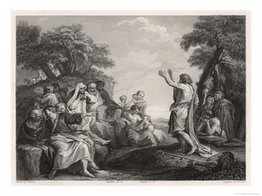 "The purpose of the church is evangelism," the evangelist said. "If you are not evangelizing I seriously doubt your salvation. At the very least you are not a good Christian."
I have an eight year old daughter that cannot speak. I am convinced that she has faith in Christ, although I have never heard her say so. Most likely she will never say so. Yet, I see the love of Christ in her eyes, and I have witnessed her minister the grace of God to my family and others. I think she is the best Christian I know.
Saying that Jesus commanded all of His followers to be evangelists is as ridiculous as saying that He commanded all Christians everywhere to preach and teach. On the contrary, there are many instances where Jesus forbids his followers from "sharing the Gospel" with others and the apostle Paul warns that many should not become teachers.
I believe that God has prepared good works for His children to be involved in. I believe that each of His children have been uniquely gifted in order to edify the Church and bring glory to God. God is so gracious that He has enabled every believer to do what He has commanded. Above all else we are commanded to love, and even a mute paraplegic can lie on his back and love God.
I submit that a good Christian is one that follows Christ, and the purpose of the Church is to love God and our neighbor as ourselves. This is our eternal purpose as we display the manifold wisdom of God in heavenly places.
Do you really want to know that you are saved? Do you want to be sure that you are sure? Then I propose that you reject the magic of men, the sorcery of hearts and the manipulation of spirits. Away with the altar calls and the secret formulas! Forget the date and time. Disregard your experience, or lack thereof. To Hell with the spiritual abuse of children and the soul damning guilt that is heaped upon weak men and women!
Take comfort from the words of God, "Little children, let no one deceive you. He who practices righteousness is righteous...By this we know love, because He laid down His life for us. And we also ought to lay down our lives for the brethren. But whoever has this world's good, and sees his brother in need, and shuts up his heart from him, how does the love of God abide in him? My little children, let us not love in word or in tongue, but in deed and in truth. And by this we know that we are of truth, and shall assure our hearts before God." (I John 3:7, 16-19)
If you are a believer God has gifted you and given you His Holy Spirit. You have everything that is needed for godliness in Christ Jesus. Walk in those good works that He prepared for you before the creation of the Universe. Obedience to the commands of Christ is the evidence of faith. Cloth the naked, feed the hungry, bind up the broken hearted and care for widows and orphans. Be prepared to give an answer to those who question.
Do all roads lead to evangelism? I don't think so. But, all followers of Christ do lead to Christ as we exercise of individual gifts within the community of faith in deed and in truth.
 John the Baptist -Print found at Art.com
05 October 2006
Quote of the Weak - The Great Commission
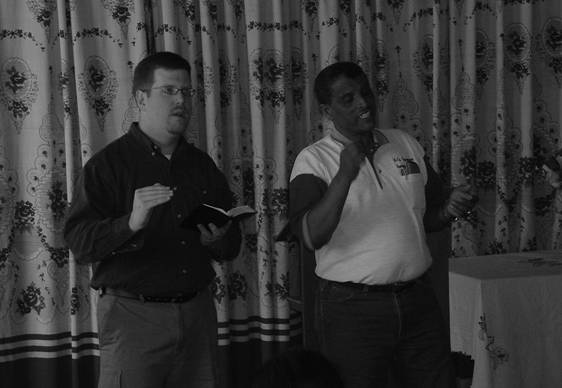
"Jesus told them to go and teach all nations. This was Jesus commanding before heaven and earth something of far greater significance than emphasizing evangelism. He is saying that the kingdom of God is open to the gentiles as well. Worship of God was no longer to be for the ceremonially clean chosen people of Israel, but for the whole world. So the Great Commission was a sweeping moment of revelation, not some emphasis on “beating the bushes” with tracts and door-to-door campaigns. We have missed the majesty of this passage if we assume it is merely about evangelistic efforts."
-- Chris Johnson (Saint Ambrose Blog)
"Therefore I take pleasure in infirmities, in reproaches, in needs, in persecutions, in distress, for Christ's sake. For when I am weak, then I am strong." (2 Corinthians 12:21)
Subscribe to:
Posts (Atom)



.jpg)